

Abstract art murals have emerged as powerful tools for transforming architectural spaces into dynamic visual experiences. These large-scale artworks transcend traditional decoration, offering businesses, homeowners, and designers the opportunity to create memorable environments through color, form, and composition. Understanding how to select, commission, and integrate abstract murals requires insight into both artistic principles and spatial design considerations.
The Evolution of Abstract Murals in Contemporary Spaces
The history of abstract art murals traces back to early modernist movements when artists began rejecting representational imagery in favor of pure visual expression. During the mid-20th century, programs like the Federal Art Project employed artists such as Burgoyne Diller to create abstract murals in public buildings, establishing a precedent for non-representational art in architectural contexts.
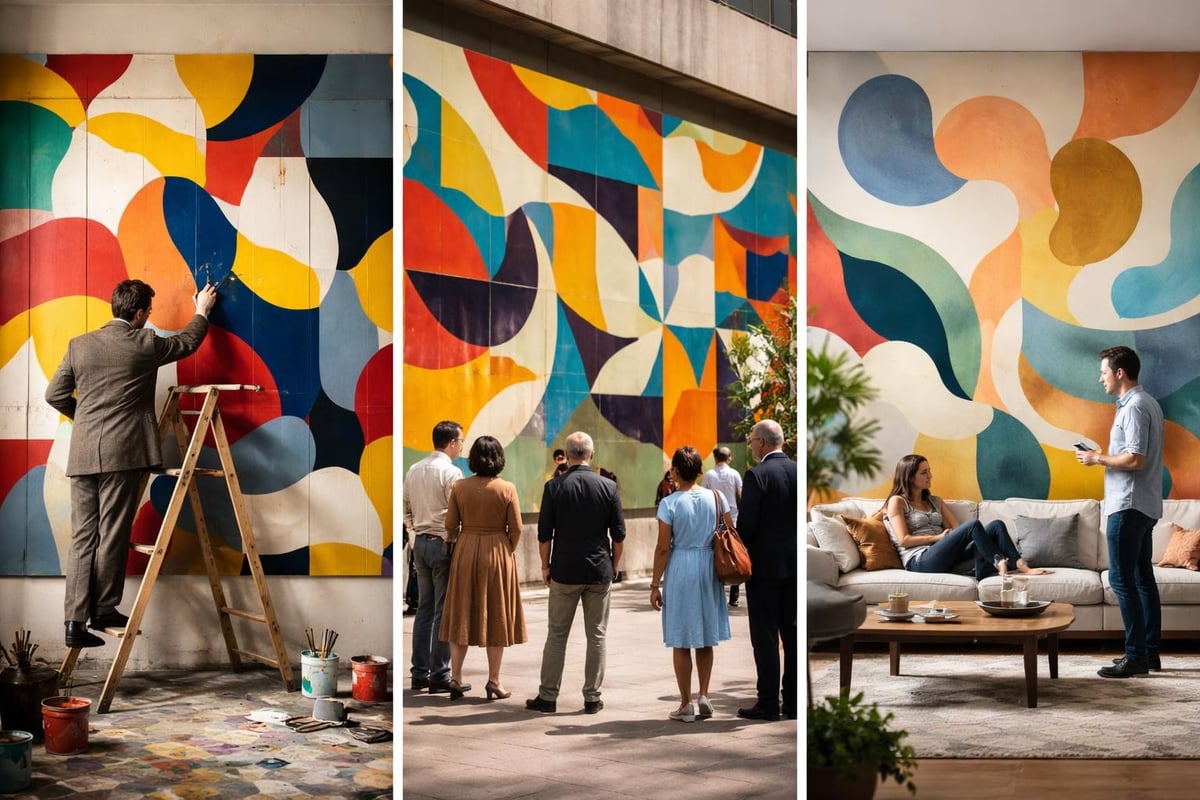
Today's abstract art murals continue this tradition while embracing new materials, techniques, and design philosophies. The influence of groups like American Abstract Artists established frameworks for understanding how geometric forms, color relationships, and compositional balance translate to architectural scale.
Key Characteristics That Define Effective Murals
Successful abstract art murals share several distinctive qualities that set them apart from other decorative approaches:
- Scale-appropriate composition that maintains visual coherence from various viewing distances
- Color relationships that complement or intentionally contrast with existing architectural elements
- Textural variation that adds depth and tactile interest even in two-dimensional works
- Geometric or organic forms that guide the viewer's eye through deliberate visual pathways
- Balanced negative space that prevents visual overwhelm while maintaining presence
The relationship between mural size and viewing distance significantly impacts design decisions. A piece intended for a corporate lobby requires different compositional strategies than one created for an intimate residential dining room.
Planning Your Abstract Art Mural Project
Before commissioning or creating an abstract mural, thorough spatial analysis ensures the finished work achieves its intended impact. This preparation phase determines success more than any other factor.
Assessing Your Space
Begin by documenting your wall dimensions, lighting conditions, and surrounding design elements. Natural light dramatically affects color perception throughout the day, while artificial lighting creates consistent but potentially limiting conditions.
| Factor | Consideration | Impact on Design |
|---|---|---|
| Wall Height | Vertical composition possibilities | Determines scale of geometric elements |
| Width | Horizontal flow and rhythm | Affects pattern repetition and balance |
| Natural Light | Color temperature and intensity | Influences palette selection |
| Traffic Flow | Viewing angles and distances | Shapes compositional focal points |
| Adjacent Colors | Existing palette relationships | Guides harmony or contrast decisions |
Room function also influences appropriate design choices. Abstract art murals in collaborative workspaces benefit from energizing color combinations, while meditation rooms or private offices may require more subdued palettes.
Establishing Design Parameters
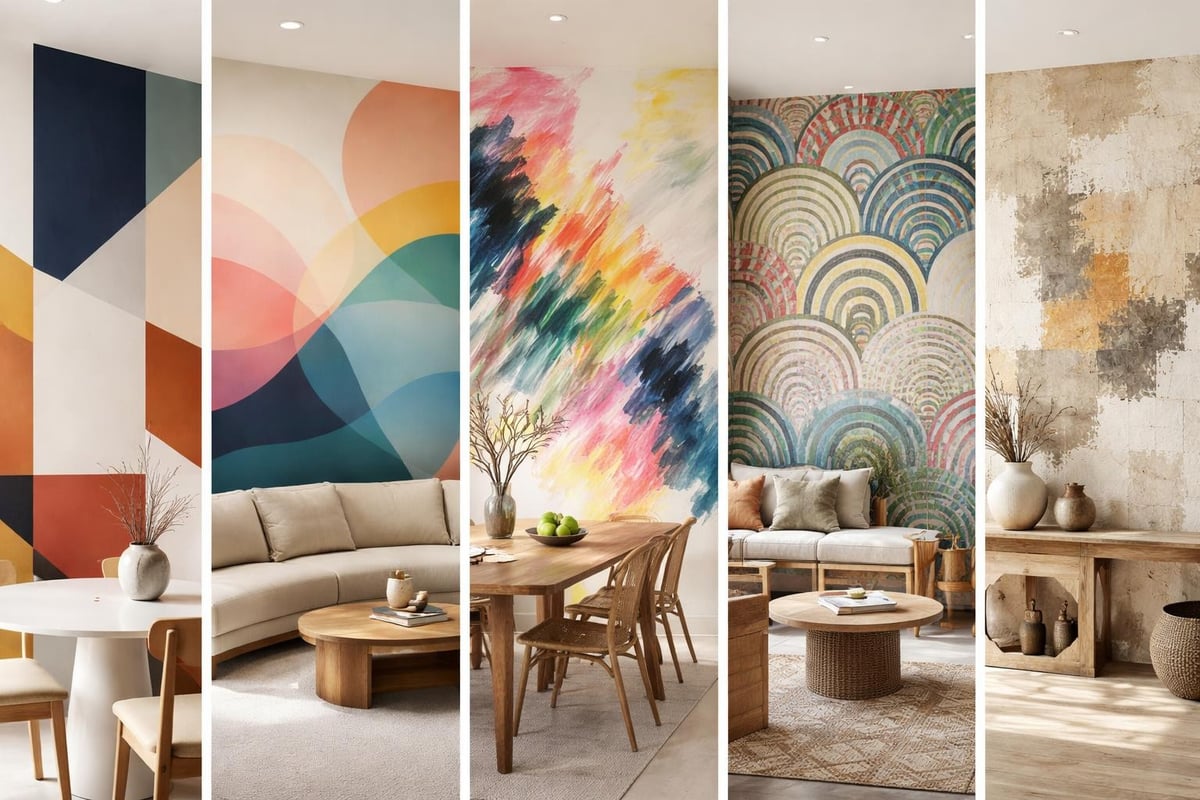
Define your aesthetic preferences early in the planning process. Do you gravitate toward hard-edge geometric abstraction or prefer fluid, organic forms? The chromatic architecture approach, for instance, emphasizes structured color relationships within geometric frameworks, creating ordered yet dynamic visual experiences.
Consider these design directions:
- Geometric minimalism featuring clean lines, limited palettes, and precise shapes
- Chromatic complexity with layered colors creating depth through transparency and overlap
- Gestural abstraction incorporating movement and expressive mark-making
- Pattern-based design using repetition and variation to establish rhythm
- Mixed-media textures combining materials for dimensional surface interest
Color Psychology and Spatial Impact
Color selection represents perhaps the most critical decision in abstract art murals, as hues profoundly influence mood, perceived space dimensions, and psychological responses. Understanding color theory basics empowers better choices aligned with your project goals.
Strategic Palette Development
Warm colors (reds, oranges, yellows) advance visually, making spaces feel more intimate and energetic. Cool colors (blues, greens, purples) recede, creating the illusion of expanded space and promoting calm. Neutral tones provide grounding elements that allow brighter accents to command attention without overwhelming.
Complementary color schemes create vibrant tension through opposite hue pairings. A mural featuring blue geometric forms against orange backgrounds generates visual electricity appropriate for creative studios or retail environments.
Analogous palettes using adjacent colors produce harmonious, cohesive results. Transitioning from yellow through orange to red creates warmth and flow, ideal for hospitality spaces or residential areas.
The chromatic intensity also matters significantly. Highly saturated colors demand attention and energize spaces, while muted tones offer sophistication and subtlety. Many successful abstract art murals balance both approaches, using saturated focal areas within predominantly subdued compositions.
Balancing Visual Weight
Distributing colors thoughtfully across your mural surface prevents compositional imbalance. Darker, more saturated areas carry greater visual weight than lighter, desaturated regions. Placing heavier elements strategically creates stability or intentional tension.
- Position darker colors lower to ground the composition
- Use lighter hues in upper areas to suggest elevation
- Concentrate saturation in focal points to direct attention
- Distribute color temperature evenly to maintain equilibrium
- Employ neutral zones as visual rest areas
Artists working in styles inspired by figures like Mark Rothko demonstrate how color field approaches create emotional resonance through simple rectangular forms in carefully calibrated hues.
Composition Techniques for Large-Scale Works
Translating artistic vision to architectural scale requires understanding compositional principles that function across expanded dimensions. What works in a tabletop painting may fail when executed at mural scale.
Establishing Visual Hierarchy
Every effective abstract mural guides viewer attention through deliberate hierarchical structure. Primary focal points anchor the composition, while secondary elements provide supporting interest and tertiary details reward closer inspection.
Create hierarchy through:
- Size variation making key elements significantly larger than supporting forms
- Color contrast using complementary or high-saturation hues for focal areas
- Edge treatment employing sharp, defined boundaries for primary shapes
- Spatial positioning placing important elements at natural viewing height
- Isolation surrounding focal points with negative space
The golden ratio (approximately 1:1.618) provides mathematically pleasing proportional relationships. Positioning major compositional divisions at golden ratio points creates inherent visual satisfaction.
Creating Movement and Rhythm
Static compositions risk becoming wallpaper rather than engaging art. Abstract art murals should establish visual pathways that lead eyes through the design, creating dynamic viewing experiences.
Rhythm emerges through pattern repetition with variation. Repeating geometric shapes in different sizes, colors, or orientations establishes predictable patterns while preventing monotony. Breaking patterns strategically creates emphasis and surprise.
Directional elements including diagonal lines, pointing shapes, or color gradients propel visual movement. Vertical emphasis suggests growth and aspiration, while horizontal orientation communicates stability and calm. Diagonal arrangements inject energy and tension.
For those exploring counterform principles, the relationship between positive shapes and negative space becomes the composition itself, with background areas holding equal importance to foreground elements.
Material and Technique Considerations
The physical execution of abstract art murals significantly impacts their final appearance, durability, and maintenance requirements. Different materials offer distinct advantages depending on project parameters.
Paint Application Methods
Traditional mural painting employs acrylics, oils, or specialty architectural paints directly on prepared wall surfaces. Acrylics dry quickly, resist fading, and clean easily, making them popular for both interior and exterior applications. Oil paints offer rich color depth and extended working time but require proper ventilation and longer curing periods.
| Material | Advantages | Limitations | Best Applications |
|---|---|---|---|
| Acrylic Paint | Fast drying, UV resistant, easy cleanup | Limited blending time | High-traffic interiors, exteriors |
| Oil Paint | Rich colors, extended blending, archival | Slow drying, ventilation needs | Climate-controlled interiors |
| Spray Paint | Smooth gradients, even coverage | Requires masking, overspray concerns | Large fields, contemporary aesthetics |
| Textured Media | Dimensional interest, tactile quality | Durability considerations | Feature walls, low-traffic areas |
Surface preparation determines longevity and appearance quality. Properly primed walls prevent paint absorption inconsistencies and ensure true color representation.
Alternative Mural Solutions
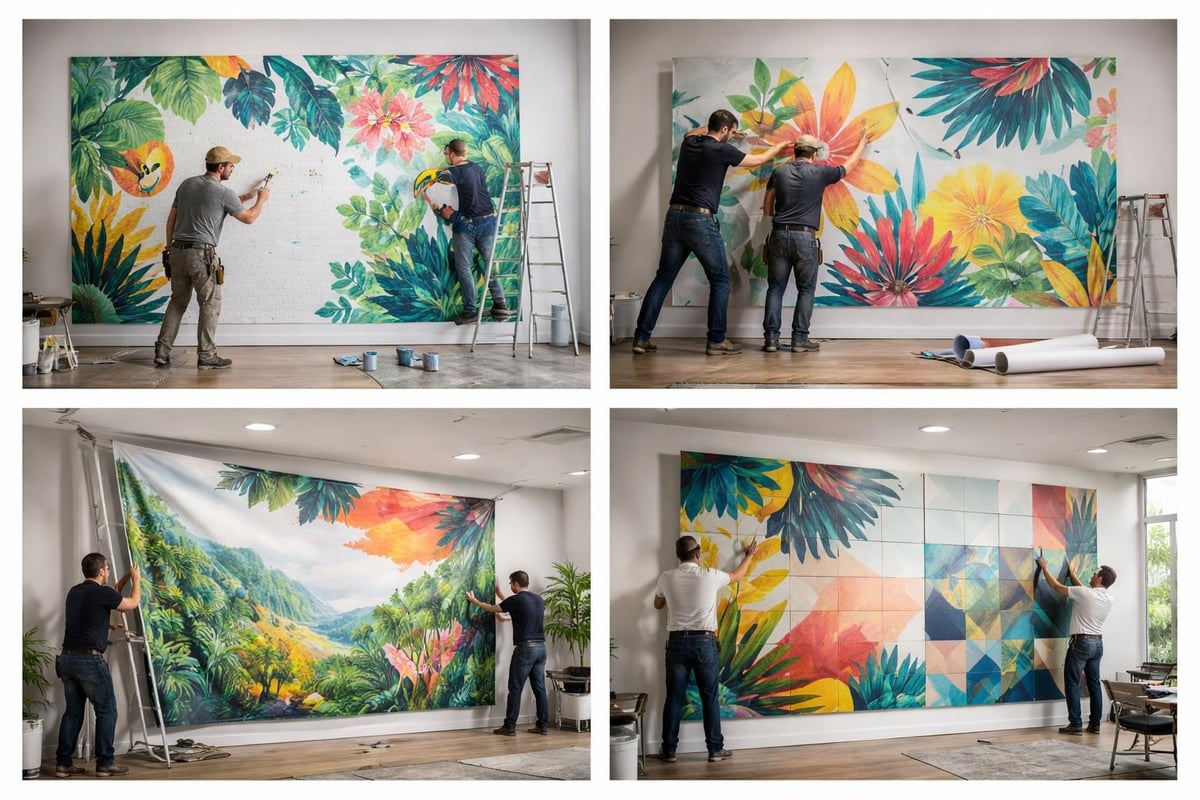
Removable options provide flexibility for temporary installations or rental properties. Printed vinyl murals reproduce abstract designs with precise color matching and photographic clarity, though they lack the textural qualities of hand-painted works.
Fabric wall coverings offer textile warmth and acoustic benefits alongside visual appeal. They install over existing surfaces and remove cleanly when needed.
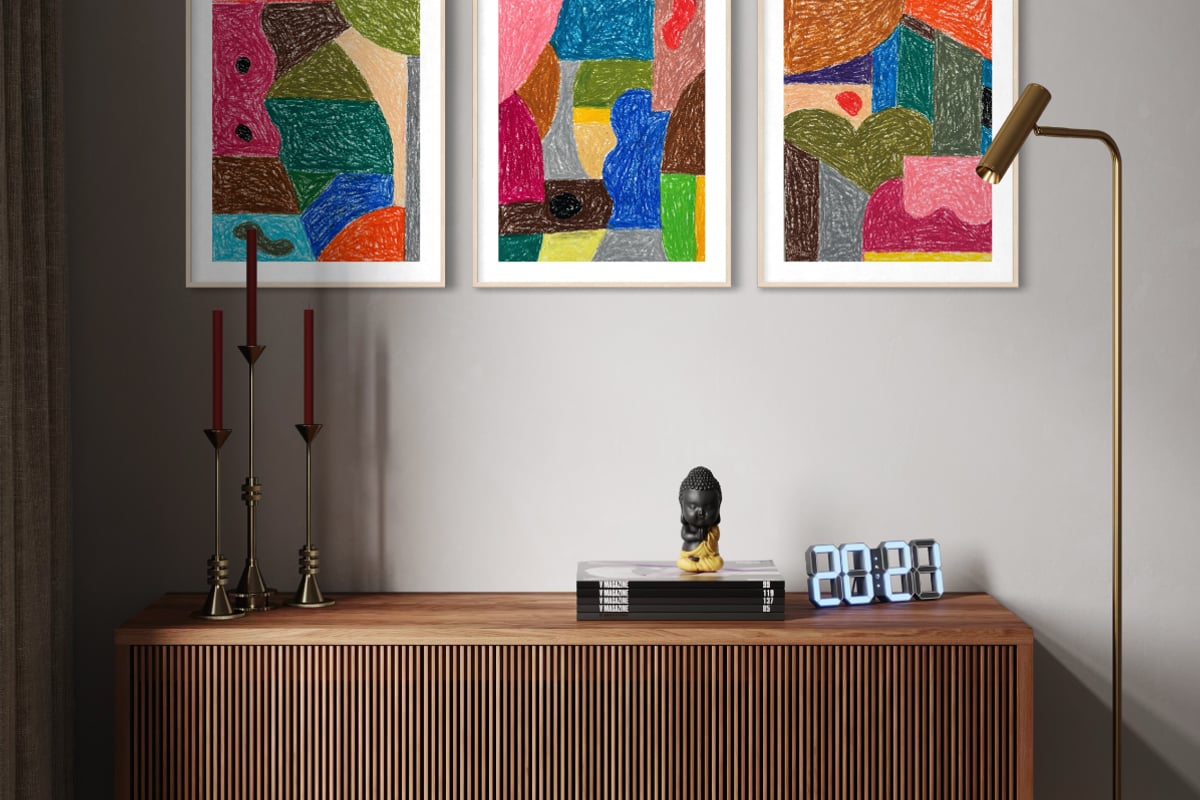
Modular panel systems allow abstract art murals to be created off-site on individual boards, then installed as cohesive compositions. This approach enables studio-quality execution with reduced on-site disruption. Works like The Triptych Dialogue demonstrate how multiple panels combine to create unified yet flexible compositions, allowing collectors to arrange elements according to specific spatial requirements.
Commissioning Custom Abstract Murals
Working with artists to create bespoke abstract art murals ensures designs perfectly align with your vision, space, and functional requirements. The commissioning process involves collaboration, communication, and mutual understanding.
Finding the Right Artist
Research artists whose existing portfolios demonstrate aesthetic alignment with your preferences. Review their past large-scale work specifically, as mural experience differs significantly from easel painting. Artists specializing in geometric abstraction bring particular strengths to architecturally integrated projects.
Evaluate these criteria when selecting mural artists:
- Portfolio relevance showing similar scales, styles, and technical approaches
- Technical proficiency with materials and methods appropriate for your project
- Communication skills enabling clear expression of concepts and constraints
- Problem-solving ability to address spatial challenges creatively
- Professional reliability regarding timelines, budgets, and expectations
Many contemporary artists maintain online galleries showcasing their range, allowing you to assess whether their vision complements your aesthetic goals.
The Collaborative Design Process
Successful commissions begin with thorough briefing sessions where you articulate your objectives, preferences, and constraints. Provide reference images representing desired moods, color directions, or compositional approaches, even if they depict different subjects or media.
- Initial consultation establishing project scope, timeline, and budget parameters
- Conceptual sketches presenting preliminary design directions for feedback
- Refined proposals incorporating your input with detailed color and composition specifications
- Material selection determining paints, finishes, and application methods
- Installation planning coordinating site access, protection, and execution logistics
Transparent budget discussions prevent misunderstandings. Mural pricing typically reflects square footage, design complexity, material costs, and artist experience. Rush timelines or difficult site conditions may incur additional fees.
Installation and Long-Term Care
Proper installation techniques ensure abstract art murals achieve their intended visual impact while maintaining structural integrity. Post-installation care preserves appearance and extends lifespan.
Professional Installation Standards
Whether hand-painting directly on walls or mounting pre-created panels, installation demands meticulous attention to preparation and execution. Surface cleaning, priming, and repair work create optimal foundations.
Environmental controls during installation prevent issues. Maintain consistent temperatures and humidity levels, particularly when working with materials sensitive to atmospheric conditions. Allow adequate ventilation when using solvent-based products.
For direct painting, establishing accurate layout guides prevents compositional drift across large surfaces. Laser levels, chalk lines, and measured grid systems ensure geometric elements align precisely. Many artists create full-scale templates for complex designs, transferring outlines before painting.
Maintenance Protocols
Abstract art murals require minimal but consistent care to maintain appearance. Regular gentle dusting prevents particle accumulation that dulls colors over time. Avoid abrasive cleaners or rough materials that damage paint surfaces.
- Dust monthly using soft, dry microfiber cloths
- Address stains immediately with appropriate gentle cleaners
- Protect from direct sunlight exposure when possible
- Monitor for cracking, flaking, or other deterioration signs
- Schedule professional assessment every few years
Different materials demand specific care approaches. Consult your artist or installer regarding recommended products and techniques for your particular mural composition.
Integrating Murals with Interior Design
Abstract art murals function as architectural elements rather than merely decorative additions. Successful integration requires considering how murals interact with furnishings, lighting, and overall spatial design.
Furniture and Layout Considerations
Position furniture to complement rather than compete with your mural. Avoid blocking significant compositional areas or creating awkward partial views. Low-profile seating allows clear sightlines, while taller pieces frame or accentuate specific mural sections.
Color coordination between murals and furnishings creates cohesive environments. Pull accent colors from the mural for throw pillows, rugs, or decorative objects, establishing visual threads throughout the space. Alternatively, use neutral furnishings that allow the mural to dominate attention.
Negative space around furniture groupings corresponds to negative space within abstract compositions. Both require thoughtful distribution to prevent cluttered or sparse perceptions.
Lighting Design for Maximum Impact
Illumination dramatically affects how abstract art murals appear throughout daily cycles. Layered lighting approaches using ambient, accent, and task sources provide flexibility and depth.
Accent lighting directed at mural surfaces highlights textures, creates dramatic shadows, and emphasizes specific compositional areas. Adjustable fixtures allow seasonal or mood-based modifications. Consider:
- Track lighting with adjustable heads for targeted illumination
- Wall washers providing even, soft coverage across entire surfaces
- Up-lighting creating atmospheric shadows and dimensional effects
- Color-tunable LED systems allowing palette adjustments
Natural light integration enhances daytime viewing while artificial systems maintain presence after dark. Understanding how abstract art influences spaces helps designers make informed decisions about lighting strategies that honor artistic intent.
Scaling Abstract Concepts Across Dimensions
Creating abstract art murals requires translating intimate artistic gestures to monumental scales. This dimensional shift presents both challenges and opportunities for visual expression.
From Study to Statement
Many successful murals begin as smaller studies exploring color relationships, compositional balance, and formal arrangements. These preliminary works allow experimentation without the commitment and expense of full-scale execution.
Test color combinations under various lighting conditions using samples or digital mockups. What appears harmonious in small format may overwhelm at architectural scale, while seemingly bold choices sometimes need amplification to maintain presence across expanded surfaces.
Proportional scaling doesn't simply enlarge every element equally. Edge weights, color saturation, and spatial relationships may require adjustment to maintain intended visual impact. Thin lines that provide delicate detail in tabletop works might disappear at distance when scaled proportionally.
Artists exploring themes through series like paintings on paper develop visual vocabularies that translate effectively to larger formats, having refined compositional strategies through iterative exploration.
Site-Specific Design Strategies
The most compelling abstract art murals respond to their architectural contexts rather than imposing generic designs. Consider ceiling heights, architectural features, window placements, and spatial functions when developing concepts.
Vertical spaces benefit from compositions emphasizing upward movement through graduated colors, ascending forms, or vertical rhythm patterns. Horizontal expanses accommodate processional viewing experiences where compositions unfold gradually as viewers move through spaces.
Irregular wall surfaces including columns, recesses, or protruding elements can be incorporated as compositional components rather than obstacles. Wrapping designs around corners creates immersive environments that engage multiple walls as unified fields.
Commercial Applications and Brand Expression
Businesses increasingly recognize abstract art murals as powerful tools for brand communication, employee engagement, and customer experience enhancement. Strategic mural deployment supports organizational objectives beyond aesthetic improvement.
Corporate Identity Through Visual Art
Abstract murals communicate brand values and personality without literal messaging. Technology companies might employ dynamic geometric compositions suggesting innovation and precision, while wellness brands favor organic forms and calming palettes promoting tranquility.
Color psychology aligns mural palettes with brand identities. Financial institutions traditionally use blues and greens conveying trust and stability, while creative agencies embrace vibrant, unexpected combinations reflecting their innovative positioning.
Distinctive murals create memorable environments that differentiate businesses from competitors. Clients and employees associate spatial experiences with brand perceptions, making thoughtfully designed murals valuable marketing investments.
Hospitality and Retail Environments
Hotels, restaurants, and retail spaces use abstract art murals to establish atmosphere and encourage longer dwelling times. Dining areas benefit from warm, appetizing palettes, while hotel lobbies might feature sophisticated neutral compositions with metallic accents.
Retail murals guide traffic flow and highlight merchandise zones. Energetic compositions near entrances create excitement, while calmer areas provide respite from commercial intensity. Instagram-worthy murals generate organic social media promotion as visitors photograph and share distinctive environments.
Working with artists who understand commercial applications ensures designs balance aesthetic ambitions with practical business objectives. Those offering art commissions specifically for commercial contexts bring valuable experience to these projects.
Future Directions in Abstract Mural Art
The field of abstract art murals continues evolving through technological innovation, sustainable practices, and expanding creative possibilities. Understanding emerging trends helps stakeholders make forward-looking decisions.
Digital Integration and Interactivity
Projection mapping overlays digital abstract animations onto architectural surfaces, creating dynamic murals that transform throughout events or daily cycles. Interactive murals respond to viewer proximity, touch, or ambient conditions, blurring boundaries between static art and responsive installations.
Augmented reality layers digital content over physical murals, allowing smartphones to reveal hidden animations, artist statements, or thematic variations. These hybrid approaches expand narrative possibilities while maintaining traditional mural foundations.
LED integration within mural surfaces enables programmable color shifts and pattern variations. Energy-efficient systems create ever-changing abstract compositions without the permanence of traditional paint applications.
Sustainable Materials and Methods
Environmental consciousness drives adoption of low-VOC paints, recycled materials, and sustainable production methods. Water-based paints, natural pigments, and biodegradable media reduce ecological impact while maintaining artistic quality.
Living walls incorporating plants within geometric frameworks merge abstract design with biophilic benefits. These installations improve air quality and acoustic performance alongside visual contributions.
Removable and recyclable mural systems allow periodic updates without generating waste, supporting circular economy principles while maintaining fresh, relevant visual environments.
Abstract art murals represent sophisticated design solutions that elevate spaces through deliberate color, composition, and scale considerations. Whether commissioning custom works or selecting existing pieces, understanding fundamental principles ensures successful integration that enhances architectural environments while expressing individual or organizational identity. Nathalie Chikhi creates original abstract artworks exploring chromatic relationships and geometric forms, offering both ready-to-install pieces and custom commissions that bring bold visual energy to residential and commercial spaces.
