

Abstract art continues to captivate collectors and interior designers who seek pieces that speak to emotion, form, and color without the constraints of representational imagery. When paired with professional framing, an abstract framed canvas becomes a complete statement piece that protects the artwork while enhancing its visual impact. Whether you're a seasoned collector or discovering abstract art for the first time, understanding the nuances of canvas framing, display techniques, and long-term care ensures your investment maintains both its aesthetic appeal and market value. This comprehensive guide explores everything you need to know about selecting, displaying, and preserving abstract framed canvas artwork in contemporary spaces.
Understanding Abstract Framed Canvas Construction
The foundation of any quality abstract framed canvas begins with the canvas material itself. Professional artists typically work on cotton or linen canvas stretched over wooden bars, creating a taut surface that accepts various media from oils to acrylics. The stretching process determines how the artwork will ultimately present when framed.
Many contemporary pieces utilize the gallery wrap technique, where the image continues around the sides of the stretcher bars. This approach offers flexibility in framing choices, allowing the work to be displayed with or without a traditional frame. For collectors seeking a polished presentation, adding a frame to a gallery-wrapped canvas creates depth and formality.
Material Quality and Longevity
Canvas quality directly impacts the artwork's lifespan and appearance. Premium canvases feature:
- Archival-grade cotton or linen that resists yellowing and deterioration
- Acid-free primers that protect pigments and prevent degradation
- Kiln-dried stretcher bars that maintain tension without warping
- UV-resistant varnishes that shield colors from fading
The frame itself serves dual purposes: protection and presentation. Wood frames remain the most popular choice for abstract works, offering durability and versatility. Metal frames provide a contemporary edge, particularly suited to geometric abstractions or works with bold color fields.

Selecting the Right Frame for Abstract Art
Frame selection transforms how viewers perceive an abstract framed canvas. Unlike representational art, where frames often complement subject matter, abstract pieces demand frames that either enhance their visual language or deliberately create contrast.
Minimalist frames with clean lines work exceptionally well with contemporary abstractions featuring geometric precision or monochromatic palettes. These frames direct attention to the artwork without competing for visual dominance. Ornate frames can create fascinating tension when paired with loose, gestural abstractions, though this approach requires careful consideration of era, style, and color compatibility.
| Frame Style | Best For | Visual Impact |
|---|---|---|
| Floating frame | Gallery-wrapped canvas | Creates shadow gap, emphasizes depth |
| Traditional wood | Classic abstractions | Warm, timeless presentation |
| Metal profile | Geometric/minimal work | Contemporary, industrial aesthetic |
| Shadow box | Textured surfaces | Protects relief, adds dimension |
Width and profile depth matter considerably. A frame that's too narrow may feel insufficient for large-scale abstractions, while oversized molding can overwhelm delicate compositions. As a general rule, canvases larger than 24x36 inches benefit from frames at least 2 inches wide.
Color Coordination Strategies
Frame color should either harmonize with the artwork's palette or provide deliberate contrast. Neutral frames in black, white, natural wood, or metallic finishes offer safe choices that adapt to various interior settings. Artists at Nathalie Chikhi often create works with complex chromatic relationships that benefit from frames in subtle wood tones or matte black profiles.
Bold frame colors work when they echo a secondary or accent color within the composition. This technique creates visual cohesion while drawing the eye to specific elements within the abstract work. Avoid frames that match the dominant color too closely, as this can flatten the overall presentation and reduce visual interest.
Display Strategies for Maximum Impact
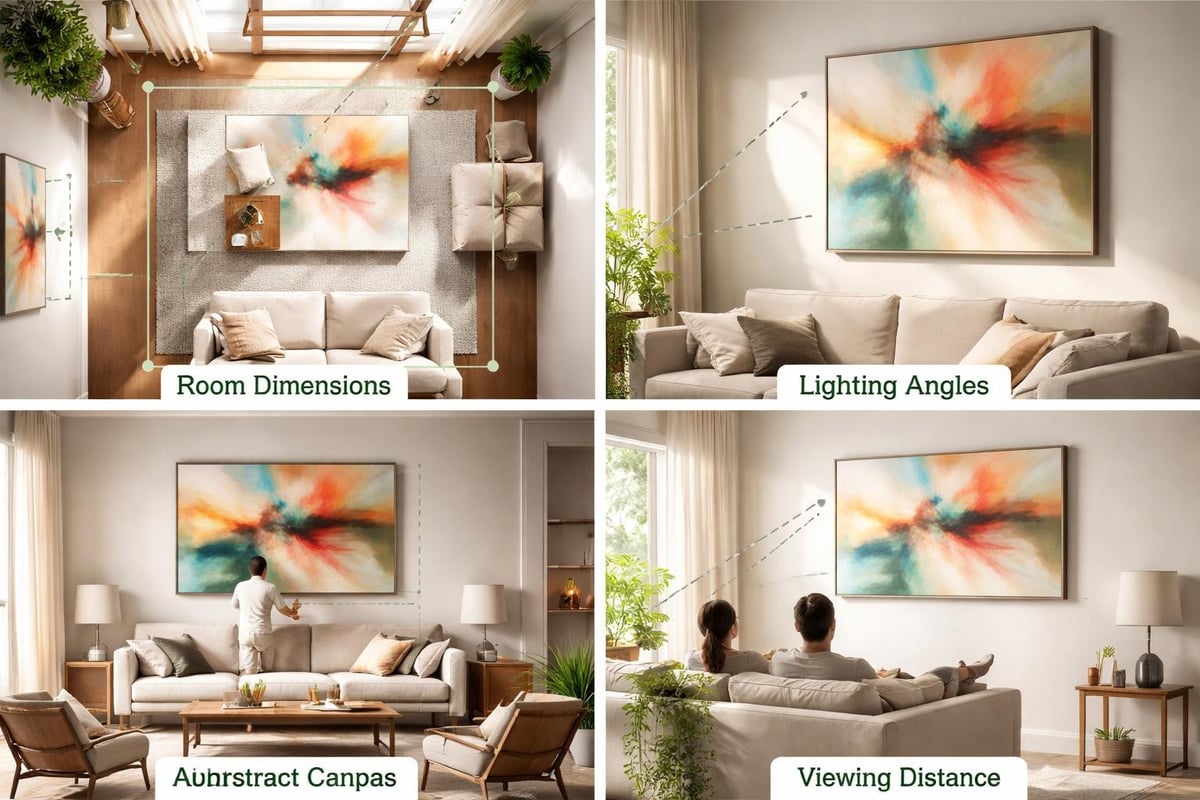
Placement determines how effectively an abstract framed canvas communicates with its environment. Unlike traditional art, which often depicts recognizable scenes best viewed at eye level, abstract works operate through color, form, and emotion, offering more flexibility in positioning.
Vertical orientation naturally draws the eye upward, creating an impression of height and elegance. This placement works particularly well in entryways, stairwells, and spaces with high ceilings. Horizontal compositions expand visual space, making them ideal for areas above furniture, beds, or in narrow hallways where width matters more than height.
Lighting Considerations
Proper illumination transforms an abstract framed canvas from a passive object into an active presence. Natural light offers the truest color representation but requires careful management to prevent UV damage. Position works perpendicular to windows rather than directly opposite to minimize glare and reduce sun exposure during peak hours.
Artificial lighting provides control and consistency. Picture lights mounted directly above the frame create focused illumination while adding sculptural dimension through controlled shadows. Track lighting offers flexibility for collections or rotating displays, allowing adjustment as artwork changes. LED bulbs with color temperatures between 2700K and 3000K render warm tones accurately without the heat damage associated with traditional incandescent bulbs.
Investment Value and Authentication
The market for abstract framed canvas artwork has shown consistent growth, with original works by emerging artists appreciating significantly over time. Collectors should prioritize pieces that demonstrate technical skill, conceptual depth, and unique artistic voice rather than purely decorative appeal.
Authentication documentation proves essential for maintaining investment value. Reputable artists provide:
- Certificates of authenticity with signature and date
- Detailed provenance information
- Technical specifications including materials and dimensions
- Professional photography for insurance purposes
Works exploring innovative themes such as chromatic architecture or shaped canvas techniques often command premium prices due to their conceptual complexity and execution challenges. Collectors interested in such pieces should research the artist's background, exhibition history, and critical reception before purchasing.
Framing as Value Protection
Professional framing represents more than aesthetic enhancement-it's an investment protection strategy. Museum-quality framing includes:
- Acid-free materials throughout construction
- Conservation glazing with UV filtering
- Proper mounting techniques that allow canvas movement
- Sealed backing preventing dust and pest intrusion
- Archival hanging hardware rated for the artwork's weight
While framing costs can represent 15-30% of the artwork's purchase price, this expense protects against damage, fading, and deterioration that could otherwise diminish value substantially. Many galleries, including those showcasing abstract framed canvas prints, offer professional framing services that ensure proper handling and materials.
Emerging Trends in Abstract Canvas Art
Contemporary abstract artists push boundaries through experimental techniques and unconventional materials. In 2026, several trends dominate the abstract framed canvas market, reflecting broader cultural shifts toward sustainability, technology integration, and multisensory experience.
Mixed media abstractions combining traditional paint with collage, textiles, or found objects create dimensional surfaces that challenge conventional framing approaches. Shadow box frames accommodate these raised elements while protecting delicate components from contact and environmental damage.
Digital-to-physical works begin as digital creations before being translated to canvas through advanced printing technologies. Collectors at venues like Abstract House find these pieces offer the precision of digital art with the tactile presence of traditional canvas.
| Trend | Characteristics | Frame Requirements |
|---|---|---|
| Textured impasto | Heavy paint application, 3D surface | Deep shadow box or floating frame |
| Color field | Large areas of flat color | Minimal frame, clean lines |
| Gestural abstraction | Dynamic brushwork, movement | Traditional frame, substantial presence |
| Geometric precision | Sharp edges, hard boundaries | Metal or contemporary wood frame |
Sustainable and Eco-Conscious Practices
Environmental awareness increasingly influences both artistic creation and framing choices. Artists committed to sustainability, such as those represented at Nathalie Chikhi, prioritize eco-friendly materials including recycled canvas, non-toxic paints, and responsibly sourced stretcher bars.
Frame manufacturers respond to this demand with reclaimed wood frames, bamboo profiles, and recycled metal options. These sustainable choices don't compromise quality-many eco-conscious frames surpass traditional materials in durability and aesthetic appeal while reducing environmental impact.
Caring for Your Abstract Framed Canvas
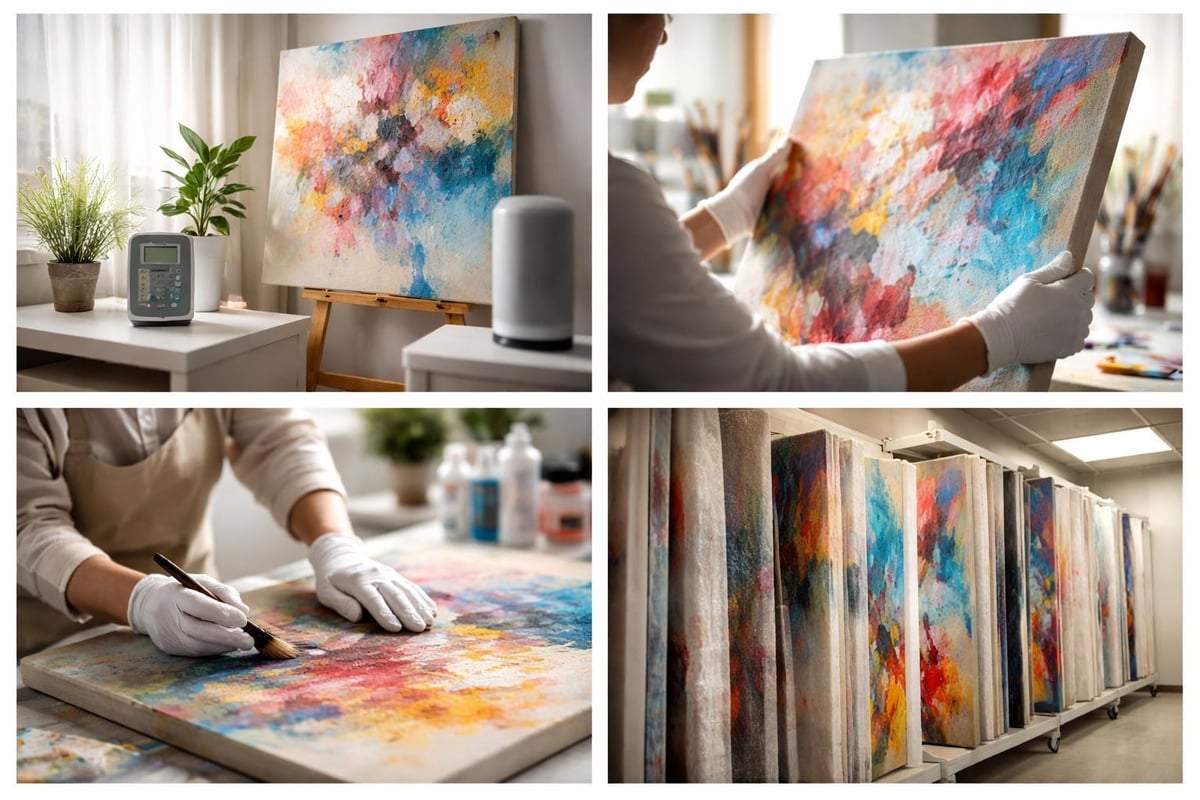
Proper maintenance ensures your abstract framed canvas remains vibrant and structurally sound for generations. Canvas artworks face specific challenges including environmental fluctuations, accumulation of airborne particles, and potential physical damage from impacts or improper handling.
Temperature and humidity control ranks as the most critical factor in canvas preservation. Ideal conditions maintain temperatures between 65-75°F with relative humidity at 40-55%. Extreme fluctuations cause canvas expansion and contraction, leading to cracking, warping, or paint delamination over time.
Cleaning and Maintenance Protocol
Regular dusting prevents particle accumulation that can embed in paint surfaces or varnish layers. Use these techniques:
- Soft, natural-bristle brushes for gentle surface cleaning
- Microfiber cloths for frame cleaning, never touching the canvas
- Compressed air at low pressure for hard-to-reach frame crevices
- Annual professional inspection for structural issues
Never use household cleaners, water, or any liquid directly on canvas surfaces. Even "gentle" cleaning products can dissolve varnish, alter pigments, or leave residue that attracts additional contamination. For valuable works or those showing signs of damage, consult professional conservators rather than attempting DIY restoration.
Building a Cohesive Collection
Collecting abstract framed canvas artwork rewards thoughtful curation rather than impulsive acquisition. Successful collections demonstrate intentionality, whether unified by color palette, artistic movement, emotional resonance, or conceptual themes. This approach creates visual dialogue between pieces while maintaining individual integrity.
Thematic consistency doesn't require identical styles. A collection exploring chromatic relationships might include both geometric color field paintings and expressive gestural works, united by their sophisticated use of hue, saturation, and value. Artists like those featured at Nathalie Chikhi often develop bodies of work exploring interconnected concepts, making them ideal for collectors seeking thematic depth.
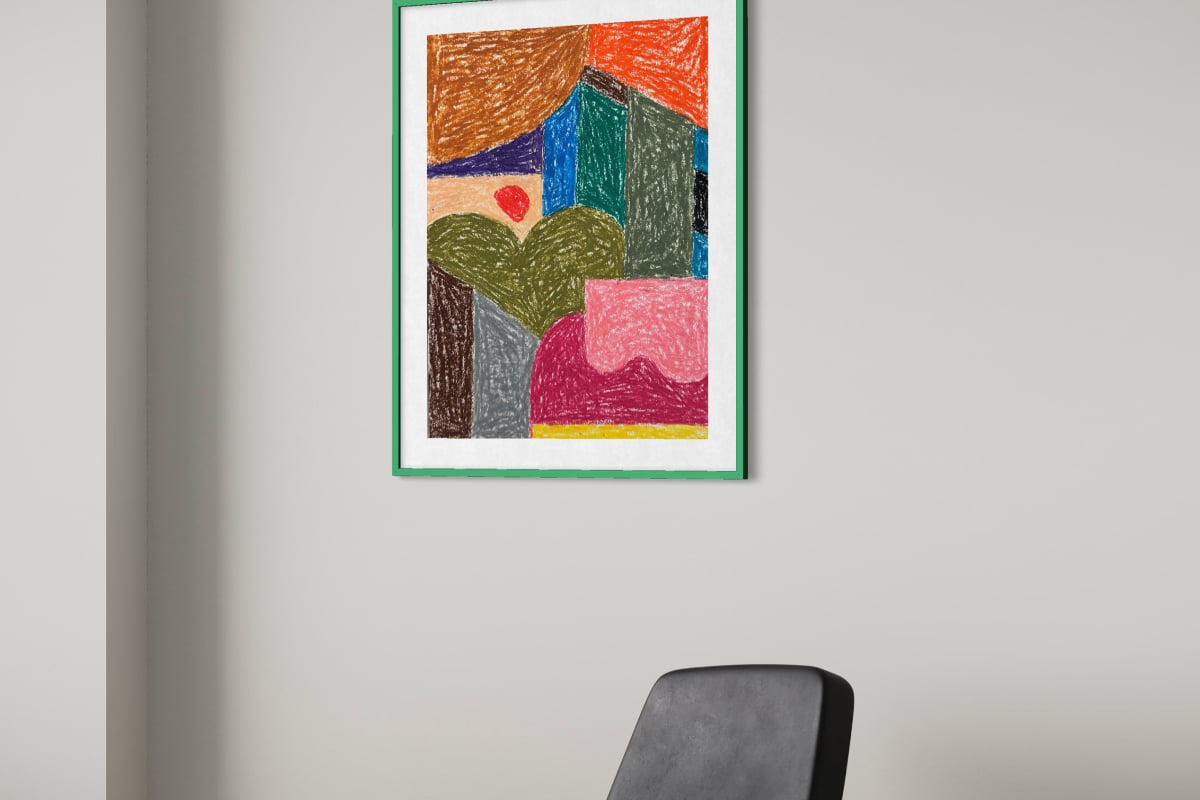
For collectors drawn to vibrant chromatic compositions that explore balance through layered geometry, works like the-chromatic-study-8-5x11 demonstrate how original works on archival paper can complement larger canvas pieces within a collection. These studies, created with oil pastel and featuring palettes spanning yellows, blues, and pinks, offer accessible entry points into an artist's creative process while maintaining investment quality through limited availability and authentication.
Arrangement and Gallery Walls
Gallery wall arrangements amplify the impact of abstract framed canvas collections. Successful configurations balance several factors:
- Spacing consistency maintaining 2-4 inches between frames
- Visual weight distribution preventing one side from dominating
- Central focal point anchoring the arrangement
- Color rhythm creating flow through complementary or contrasting hues
- Frame variety mixing sizes while maintaining stylistic cohesion
Templates and planning tools help visualize arrangements before committing to wall installation. Create paper templates matching frame dimensions and experiment with configurations on the floor or using painter's tape on walls to preview spacing and balance.
Custom Framing vs. Pre-Framed Options
Collectors face decisions between purchasing pre-framed abstract canvas artwork or investing in custom framing for unframed pieces. Each approach offers distinct advantages depending on budget, timeline, and specific artwork requirements.
Pre-framed options from retailers like The Mint Julep provide immediate availability and budget-friendly pricing. These pieces feature frames selected by professional curators who understand color relationships and style compatibility. However, customization remains limited, and frame quality may not meet museum standards for valuable originals.
Custom framing allows complete control over materials, profile, color, and protective features. Working with professional framers ensures proper conservation techniques while achieving perfect aesthetic integration with your space. Though more expensive initially, custom framing protects investment value and allows adaptation to evolving design preferences through future reframing.
Working with Professional Framers
Quality framers offer expertise extending beyond material selection. They assess artwork condition, recommend appropriate conservation measures, and suggest framing approaches that enhance rather than compete with the piece. Expect comprehensive consultations covering:
- Canvas condition assessment and stabilization needs
- Material options including wood species, metal finishes, and glazing
- Conservation requirements based on artwork age and media
- Hanging systems appropriate for weight and wall type
- Estimated timeline and detailed pricing
Request samples showing frame profiles at actual size alongside the artwork when possible. Digital mockups help but can't replicate the physical presence and scale relationships that determine successful framing choices. Reputable framers stand behind their work with guarantees covering construction quality and material performance.
Abstract Art in Commercial Spaces
Abstract framed canvas artwork increasingly dominates corporate environments, hospitality venues, and healthcare facilities. These settings benefit from abstraction's universal appeal-works communicate through form, color, and composition without cultural or linguistic barriers that might limit representational art.
Corporate collections favor abstractions suggesting professionalism, innovation, and forward thinking. Large-scale pieces in reception areas make immediate impressions, while smaller works in conference rooms and private offices create focused environments supporting concentration and creativity. Collections from sources like Canvas4Walls demonstrate the range available for commercial applications.
Healthcare environments utilize abstract art for its documented therapeutic benefits. Studies show abstract compositions in calming color palettes reduce patient anxiety, lower perceived pain levels, and improve overall satisfaction with care experiences. Frames in these settings require durability and easy cleaning while maintaining aesthetic sophistication.
Installation Considerations
Commercial installations demand professional planning and execution. Considerations include:
- Load-bearing capacity of walls, especially for large-scale works
- Security systems preventing theft or vandalism
- Lighting integrated with building systems
- Regular rotation schedules maintaining visual freshness
- Insurance coverage appropriate for collection value
Partnerships with galleries or artist representatives streamline commercial acquisitions while ensuring proper documentation and authenticity. Many artists, including those at Nathalie Chikhi, welcome commercial commissions that allow creation of site-specific works perfectly scaled and colored for particular environments.
Abstract framed canvas artwork represents a timeless investment in aesthetic pleasure, emotional resonance, and cultural value that enriches any environment. By understanding construction quality, framing techniques, display strategies, and proper care, collectors ensure their pieces maintain beauty and value for decades. Nathalie Chikhi offers original artworks and prints exploring chromatic architecture and innovative abstract concepts, providing collectors with unique pieces that transform spaces while supporting living artists. Explore the current collection to discover how contemporary abstract art can elevate your collection or environment.
