

The rise of contemporary large art in modern interior design reflects a fundamental shift in how we experience visual culture. These expansive works command attention, transforming bare walls into dynamic focal points that anchor entire rooms. As collectors and design enthusiasts increasingly seek statement pieces that reflect personality and sophistication, understanding the nuances of large-scale contemporary artwork becomes essential for making informed acquisition decisions.
Understanding Scale in Contemporary Art
Scale defines the physical presence of artwork and its relationship to surrounding space. Contemporary large art typically ranges from pieces measuring five feet in a single dimension to monumental installations spanning entire walls or multiple stories. This dramatic sizing creates immersive experiences that smaller works simply cannot achieve.
The psychological impact of scale operates on multiple levels. Large artworks engage peripheral vision, creating enveloping visual fields that shift how viewers perceive both the art and the environment. Artists like Ashley Collins, known for massive-scale abstract paintings, leverage this phenomenon to create works that feel almost architectural in their presence.
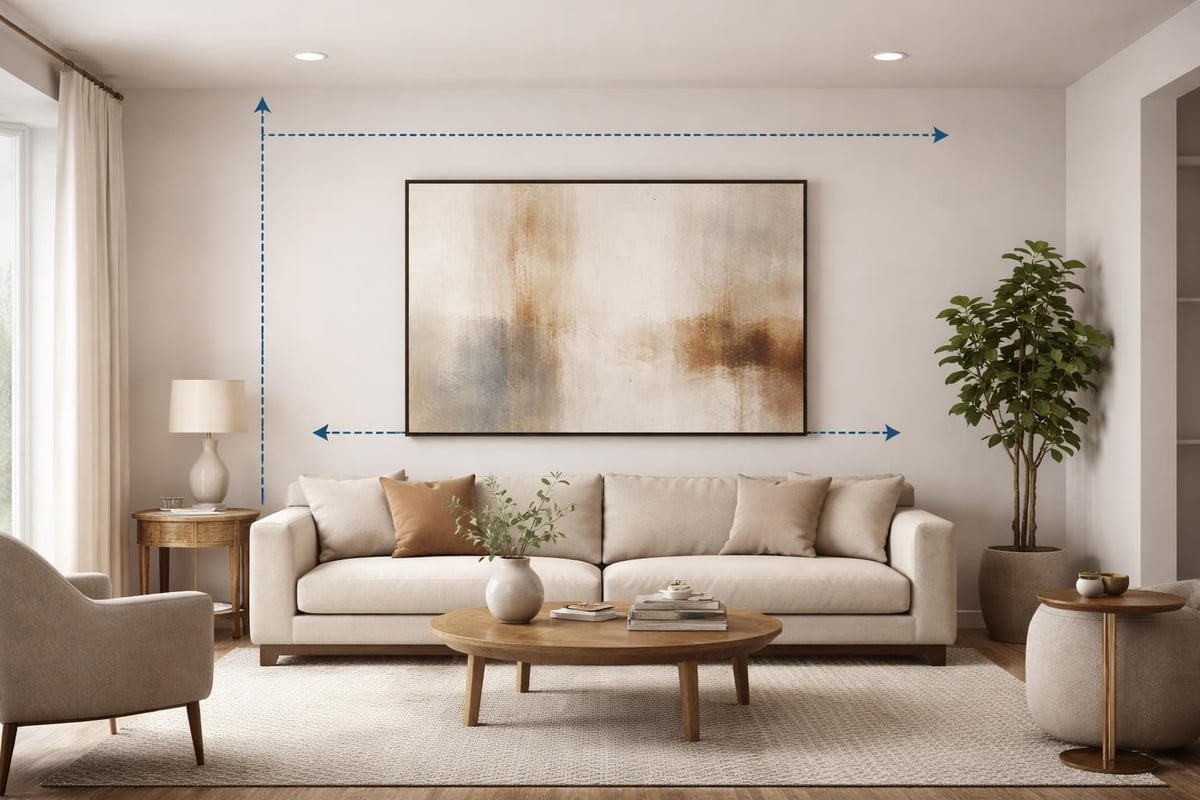
Physical Dimensions and Visual Weight
Physical size alone does not determine impact. Visual weight-influenced by color intensity, compositional density, and contrast-plays an equally critical role in how contemporary large art affects a space.
Consider these factors when evaluating scale:
- Ceiling height: Works should occupy roughly two-thirds to three-quarters of available vertical space
- Wall width: Horizontal pieces work best when spanning 50-75% of wall length
- Viewing distance: Optimal engagement occurs when viewers stand at a distance equal to 1.5 times the artwork's diagonal measurement
- Furniture proportion: Large artworks should visually balance with major furniture pieces below or adjacent to them
| Ceiling Height | Recommended Artwork Height | Ideal Viewing Distance |
|---|---|---|
| 8 feet | 48-60 inches | 6-8 feet |
| 10 feet | 60-75 inches | 8-10 feet |
| 12+ feet | 75-96 inches | 10-12 feet |
Artists working in large formats must consider both creation logistics and installation requirements. Ethan Cook, whose woven canvases create large-scale color fields, demonstrates how process and material choices directly influence final dimensions.
Material Considerations for Large-Scale Works
Contemporary large art demands careful material selection to ensure structural integrity and longevity. The physical challenges of creating expansive works require artists to balance aesthetic vision with practical engineering.
Canvas remains the predominant substrate for large paintings, with heavyweight varieties (10-12 oz) providing necessary stability. Gallery-wrapped stretcher bars typically require cross-bracing for works exceeding 40 inches in any dimension. Professional artists invest in museum-quality materials that prevent sagging, warping, or deterioration over decades.
Paper-based works present unique considerations at large scale. Archival papers must withstand mounting processes without buckling or rippling. The chromatic architecture collection demonstrates how careful material selection allows vibrant compositions on paper to maintain integrity even at poster dimensions.
Surface Treatment and Longevity
Protective finishes become increasingly important as artwork size increases. UV-resistant varnishes prevent fading from natural light exposure, while anti-reflective coatings reduce glare in brightly lit spaces.
Modern archival standards recommend:
- UV protection: Minimum 95% UV filtering for works exposed to natural light
- Humidity control: Maintaining 40-55% relative humidity prevents material stress
- Temperature stability: Avoiding fluctuations beyond 10-degree ranges
- Professional framing: Acid-free materials throughout all mounting and framing components
- Regular maintenance: Annual inspections for early detection of environmental damage
Andrea Marie Breiling employs spray paint techniques that require specialized sealants to preserve vibrancy. Her large-scale abstracts illustrate how contemporary methods expand material possibilities while introducing new preservation challenges.
Placement Strategies for Maximum Impact
Strategic placement elevates contemporary large art from mere decoration to transformative design element. Professional designers consider sightlines, lighting conditions, and spatial flow when positioning statement pieces.
The traditional eye-level hanging guideline (center point at 57-60 inches) requires adjustment for oversized works. In rooms with standard 8-foot ceilings, centering large pieces slightly lower (50-55 inches) often creates better visual balance. High-ceiling spaces allow for elevated placement that draws eyes upward, emphasizing vertical volume.
Lighting Techniques
Proper illumination reveals texture, color depth, and compositional nuance in contemporary large art. Three primary approaches dominate professional installations:
Track lighting offers flexibility for large wall compositions. Adjustable heads allow precise beam angles that minimize glare while highlighting specific areas. Position tracks 24-30 inches from the wall for optimal coverage.
Picture lights mounted directly above frames provide focused illumination but require careful sizing. For works exceeding 60 inches, multiple coordinated fixtures prevent shadowing in peripheral areas.
Natural light integration demands UV protection but offers unparalleled color rendering. South-facing walls receive consistent illumination, though intensity management through window treatments prevents overexposure.
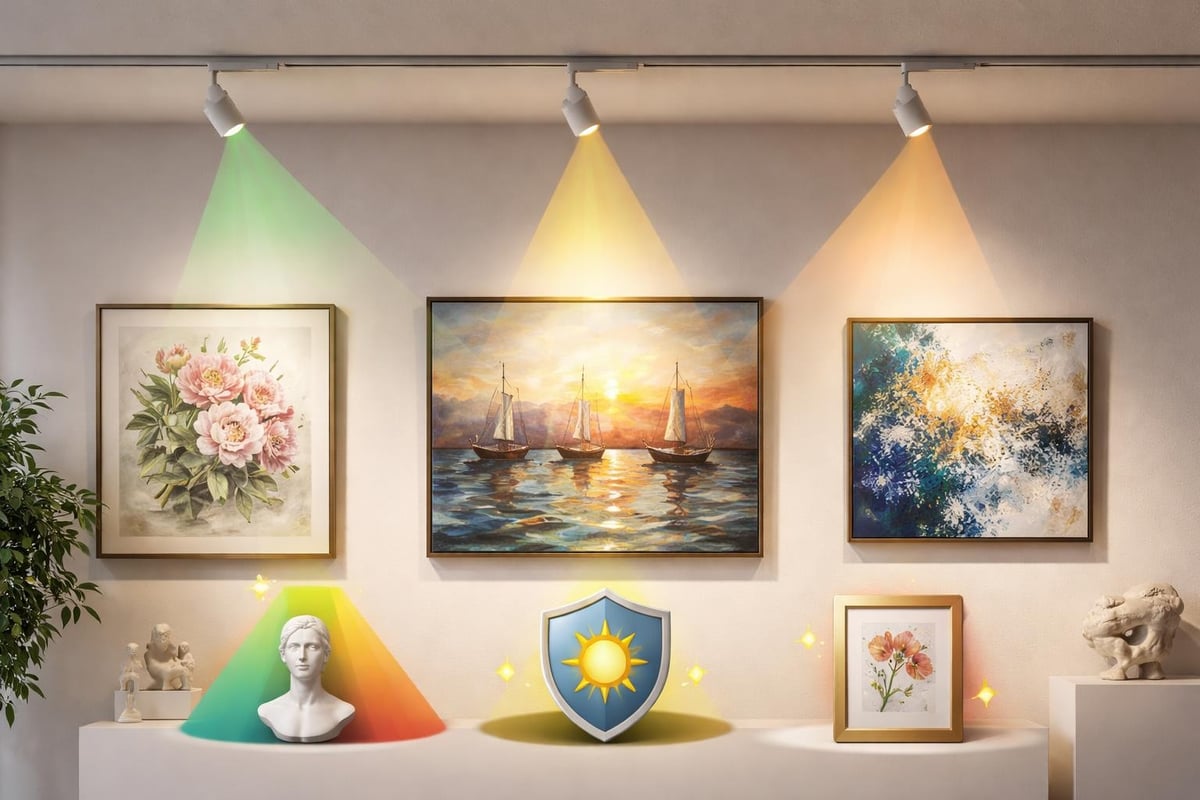
Contemporary artists like Beatriz Milhazes create large-scale works with complex layering that reveals different details under varying light conditions. Her vibrant collages demonstrate why lighting consideration proves essential during acquisition planning.
Compositional Approaches in Large Format
Creating compelling contemporary large art requires compositional strategies that maintain viewer engagement across expansive surfaces. Artists employ various techniques to prevent visual monotony while establishing cohesive statements.
Repetition with variation creates rhythm in large compositions. Geometric patterns, color progressions, or mark-making sequences guide eyes across surfaces in controlled movements. This approach appears prominently in works featured in large-scale contemporary art collections, where structural elements organize complex visual information.
Focal point placement becomes critical as dimensions increase. The rule of thirds-dividing compositions into nine equal sections-helps position key elements at intersection points that naturally attract attention. Multiple focal points distributed across large surfaces create visual paths that encourage prolonged viewing.
Color Distribution and Visual Weight
Color choices significantly impact how contemporary large art functions within spaces. Bold, saturated palettes command immediate attention but risk overwhelming smaller rooms. Subtle, tonal variations create sophisticated presence without dominating environments.
Strategic color distribution techniques include:
- Chromatic anchoring: Positioning intense hues at specific points to guide eye movement
- Tonal gradation: Shifting color values across surfaces to suggest depth or movement
- Temperature contrast: Balancing warm and cool areas to create visual tension
- Saturation modulation: Varying color intensity to establish hierarchy and focus
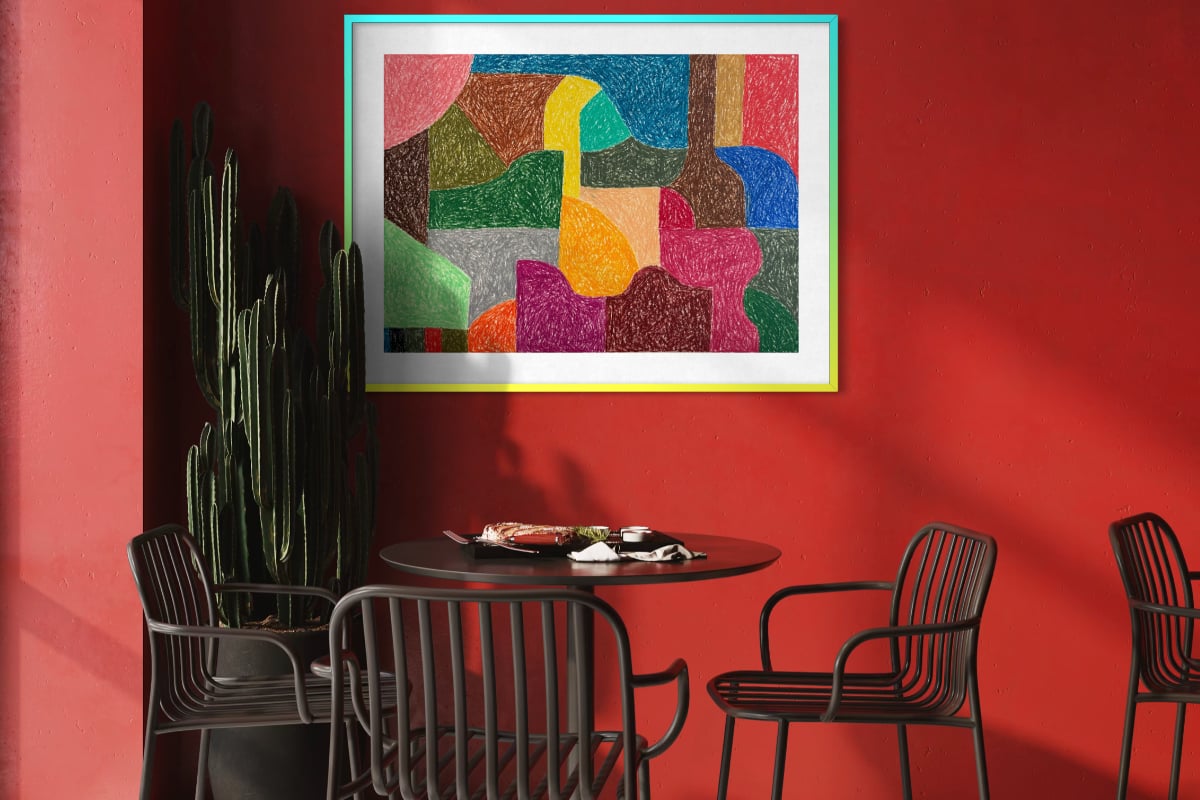
Works exploring chromatic relationships through layered geometry demonstrate how controlled palettes maintain interest across large formats. These pieces balance boldness with sophistication, making them suitable for diverse interior contexts.
Investment Considerations and Market Trends
Contemporary large art represents significant financial commitments requiring careful evaluation. Understanding market dynamics, authentication practices, and value factors helps collectors make sound investment decisions.
The contemporary art market has shown consistent growth, with large-scale works commanding premium prices due to production complexity and installation impact. Limited edition prints and original works from emerging artists offer accessible entry points while maintaining appreciation potential.
Authentication documentation proves essential for resale value. Certificates of authenticity should include artist signatures, creation dates, medium specifications, and edition numbers for multiples. Provenance records tracking ownership history further establish legitimacy and market positioning.
| Investment Factor | Emerging Artists | Established Artists | Blue-Chip Artists |
|---|---|---|---|
| Entry price range | $500-$5,000 | $5,000-$50,000 | $50,000+ |
| Appreciation potential | High risk/High reward | Moderate/Steady | Low risk/Stable |
| Market liquidity | Limited | Moderate | High |
| Authentication complexity | Simple | Moderate | Extensive |
Commission Opportunities
Custom commissions allow collectors to obtain perfectly scaled contemporary large art for specific spaces. Working with artists on commissions ensures color coordination, dimensional precision, and thematic alignment with existing design schemes.
Commission processes typically involve:
- Initial consultation: Discussing vision, space parameters, and budget constraints
- Concept development: Reviewing preliminary sketches or digital mockups
- Material selection: Choosing substrates, media, and finishing approaches
- Production timeline: Establishing realistic completion schedules for large works
- Installation planning: Coordinating delivery logistics and professional hanging
Artists like Ugo Rondinone, known for monumental land art installations, demonstrate how collaborative processes yield works precisely calibrated to sites and contexts.
Display Contexts Beyond Residential Spaces
Contemporary large art thrives in commercial, hospitality, and institutional settings where scale amplifies brand identity and visitor experience. Corporate collections leverage statement pieces to communicate values, sophistication, and forward-thinking culture.
Hospitality venues utilize large artworks to establish memorable atmospheres that differentiate properties in competitive markets. Hotel lobbies, restaurant dining rooms, and conference centers benefit from pieces that function as both decoration and conversation catalyst.
Healthcare facilities increasingly incorporate contemporary large art to create calming, humanized environments. Research indicates visual engagement with artwork reduces patient stress and improves recovery outcomes, making art acquisition a wellness investment.
Installation in High-Traffic Areas
Public and semi-public spaces require additional considerations for contemporary large art display:
Durability: Works must withstand environmental variations, accidental contact, and cleaning protocols. Sealed surfaces and robust framing protect against damage.
Security: Valuable pieces need anchoring systems preventing theft or vandalism. Specialized hardware and monitoring systems provide peace of mind.
Accessibility compliance: Installations must not obstruct pathways or create hazards for individuals with mobility challenges. Maintaining 36-inch clearances ensures code compliance.
Maintenance accessibility: Cleaning and condition assessment require safe access. Plan for scaffolding or lift equipment when positioning pieces above reach.
Contemporary artists creating for institutional contexts balance aesthetic ambition with practical durability. Deanna Sirlin, whose large-scale installations appear in public venues globally, exemplifies this synthesis of vision and functionality.
Caring for Large-Format Contemporary Artworks
Proper maintenance preserves contemporary large art's visual impact and financial value. Establishing care routines prevents deterioration while maintaining optimal presentation quality.
Dust accumulation dulls surfaces and obscures fine details. Monthly gentle dusting with microfiber cloths removes particles without scratching. For textured surfaces, soft-bristle brushes lift debris from crevices. Avoid commercial cleaning products unless specifically approved by the artist or conservator.
Annual professional inspections identify emerging issues before they become serious problems. Conservators check for canvas tension, frame stability, surface integrity, and environmental damage indicators. Early intervention prevents costly restoration needs.
Environmental Monitoring
Climate control proves critical for long-term preservation. Install hygrometers and thermometers to track conditions, maintaining stable ranges that prevent material stress.
| Environmental Factor | Ideal Range | Risk Threshold | Consequences of Deviation |
|---|---|---|---|
| Temperature | 68-72°F | Below 60°F or above 80°F | Canvas expansion/contraction |
| Humidity | 45-55% | Below 35% or above 65% | Cracking, mold, warping |
| Light exposure | <200 lux | >500 lux | Fading, discoloration |
| Air quality | Clean, filtered | Pollution, smoke | Surface degradation |
Document condition through regular photography. Create visual records from consistent angles and lighting to track subtle changes over time. This archive proves invaluable for insurance claims and authentication verification.
Emerging Artists and Contemporary Large Art
The next generation of artists pushes boundaries in scale, material, and concept. Identifying emerging talent early allows collectors to acquire significant works at accessible prices while supporting artistic development.
Social media platforms and online galleries democratize discovery, connecting artists directly with collectors worldwide. Instagram, in particular, serves as a primary exhibition space where artists showcase works-in-progress and completed pieces. Following artist accounts provides insight into creative processes and upcoming availability.
Art fairs and open studio events offer in-person encounters with contemporary large art before acquisition. Experiencing scale, texture, and color in person reveals qualities that photography cannot capture. These events also facilitate direct conversations with artists about inspiration, technique, and future directions.
Building Meaningful Collections
Strategic collecting requires vision beyond individual pieces. Consider how contemporary large art works interact to create cohesive narratives across spaces. Thematic collecting-focusing on specific styles, media, or conceptual approaches-builds collections with intellectual coherence and market recognition.
Many collectors develop ongoing relationships with artists, following careers through multiple phases and acquiring representative works from different periods. This approach creates personal collections that document artistic evolution while potentially increasing investment value as careers develop.
Original artworks and prints from emerging artists offer varied price points suitable for different collecting strategies. Limited editions provide authenticity and scarcity while remaining accessible compared to unique pieces.
Successful collectors balance aesthetic attraction with research and due diligence. Understanding an artist's exhibition history, critical reception, and market trajectory informs purchasing decisions. Gallery relationships provide expert guidance and access to new works before public availability.
Contemporary large art transforms spaces through commanding presence, sophisticated composition, and enduring visual impact. Whether selecting statement pieces for residential environments or curating collections for commercial venues, understanding scale relationships, material quality, and placement strategies ensures successful integration. Nathalie Chikhi offers original artworks and prints exploring chromatic architecture and geometric abstraction, providing collectors with distinctive pieces that bring bold, contemporary vision to any space.
