

Grid art represents one of the most enduring structural approaches in visual composition, merging mathematical precision with creative expression. Artists have employed grid systems for centuries, from Renaissance masters using grids for proportion to contemporary creators exploring minimalism and geometric abstraction. This structured methodology provides both a foundation for beginners learning fundamental skills and a sophisticated framework for established artists pushing conceptual boundaries. Understanding how grids function in artistic practice opens new possibilities for composition, color relationships, and spatial dynamics that remain relevant across traditional and digital mediums.
The Foundation of Grid-Based Composition
The grid format in visual art emerged as a powerful tool during the early twentieth century, when avant-garde movements recognized its potential for creating order and rhythm. Artists like Piet Mondrian and Kazimir Malevich utilized grid structures to reduce composition to essential elements, stripping away representational imagery in favor of pure form. This approach revolutionized how creators thought about pictorial space.
Contemporary artists continue exploring grid art through diverse materials and methodologies. The structured framework allows for systematic exploration of color theory, with each compartment functioning as an independent study while contributing to the overall harmony. This dual nature creates tension between individual elements and collective impact, a characteristic that defines much of modern geometric abstraction.
Structural Advantages for Artists
Working within grid constraints offers several practical benefits that enhance the creative process:
- Organized workflow: Breaking complex compositions into manageable sections
- Consistent proportions: Maintaining visual balance across multiple elements
- Color relationships: Testing palette interactions in controlled environments
- Scalability: Adapting compositions to various sizes without losing integrity
- Systematic experimentation: Documenting variations and progressions methodically
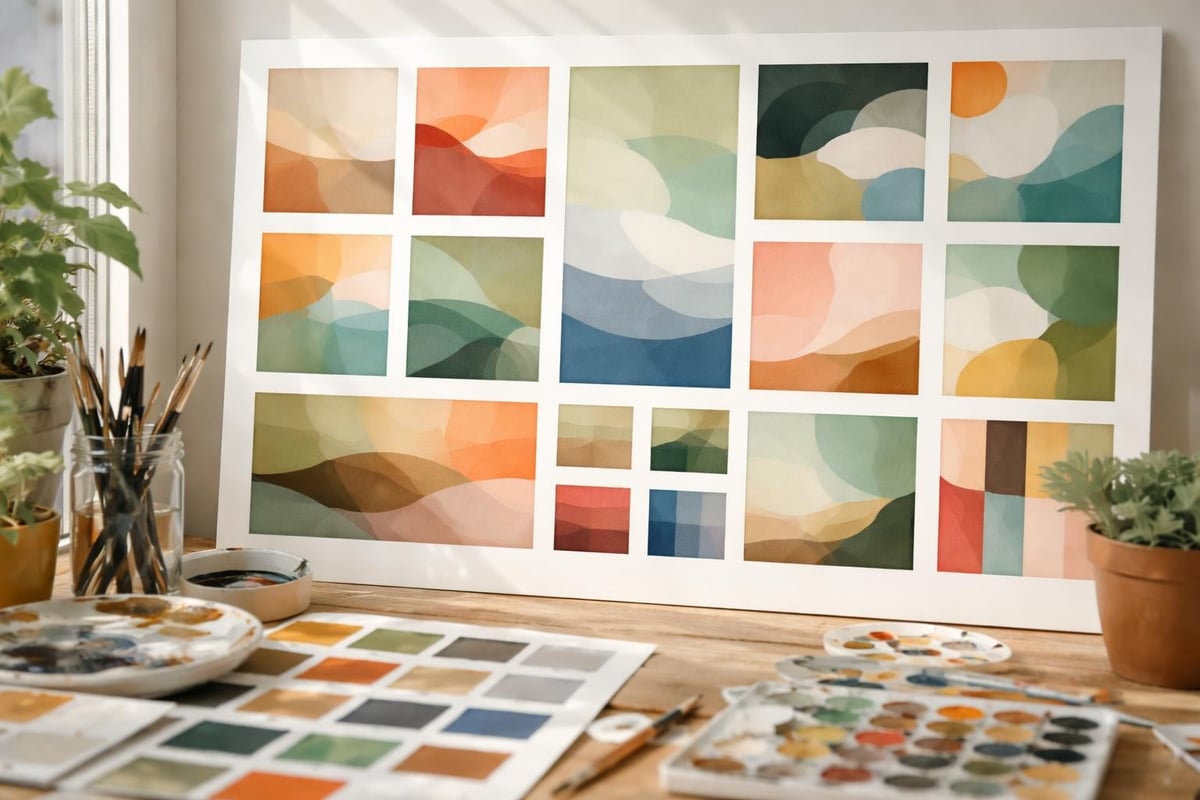
These advantages explain why grid art remains popular in studio practices, from paintings on canvas to works on paper. The structure provides freedom within boundaries, encouraging exploration while maintaining cohesion.
Historical Evolution and Contemporary Applications
The grid's journey through art history reflects broader shifts in aesthetic philosophy and cultural values. During the modernist period, grids symbolized rationality and progress, representing humanity's ability to impose order on chaos. Artists associated with movements like De Stijl and Constructivism embraced the grid as both formal device and ideological statement.
By the 1960s and 1970s, minimalist and conceptual artists adopted grid art for different reasons. They recognized its capacity to neutralize composition, allowing other elements like material properties or process to take precedence. Artists such as Arnaud Maggs employed grid formations in portraiture, using systematic arrangements to explore themes of classification and memory.
| Era | Movement | Grid Application | Key Characteristics |
|---|---|---|---|
| Early 1900s | De Stijl | Structural organization | Primary colors, vertical/horizontal lines |
| Mid-1900s | Minimalism | Neutral framework | Repetition, reduction, material focus |
| Late 1900s | Conceptual Art | Systems and classification | Documentation, seriality, process |
| 2000s-Present | Digital Art | Pixel-based composition | Screen-based work, interactivity, collaboration |
This evolution demonstrates how grid art adapts to changing technological contexts while maintaining core principles of organization and rhythm.
Technical Approaches and Methodologies
Creating effective grid art requires understanding both the mathematical foundation and intuitive adjustment. Artists typically begin by determining grid dimensions based on the support size and desired complexity. A simple four-by-four grid offers sixteen compartments for exploration, while more intricate arrangements provide exponentially greater possibilities.
Planning and Execution Strategies
The preliminary phase establishes parameters that guide the entire creative process. Consider these essential steps:
- Determine grid proportions: Calculate compartment dimensions based on overall work size
- Select marking method: Use pencil, tape, or digital guides depending on medium
- Establish color palette: Limit choices to create cohesion or expand for dynamic contrast
- Define application technique: Decide whether compartments receive individual treatment or flow together
- Document variations: Record decisions and outcomes for future reference
Many artists working with grid structures find that systematic documentation enhances their practice. Keeping visual records of palette choices, proportion experiments, and compositional variations builds a personal reference library that informs future work.
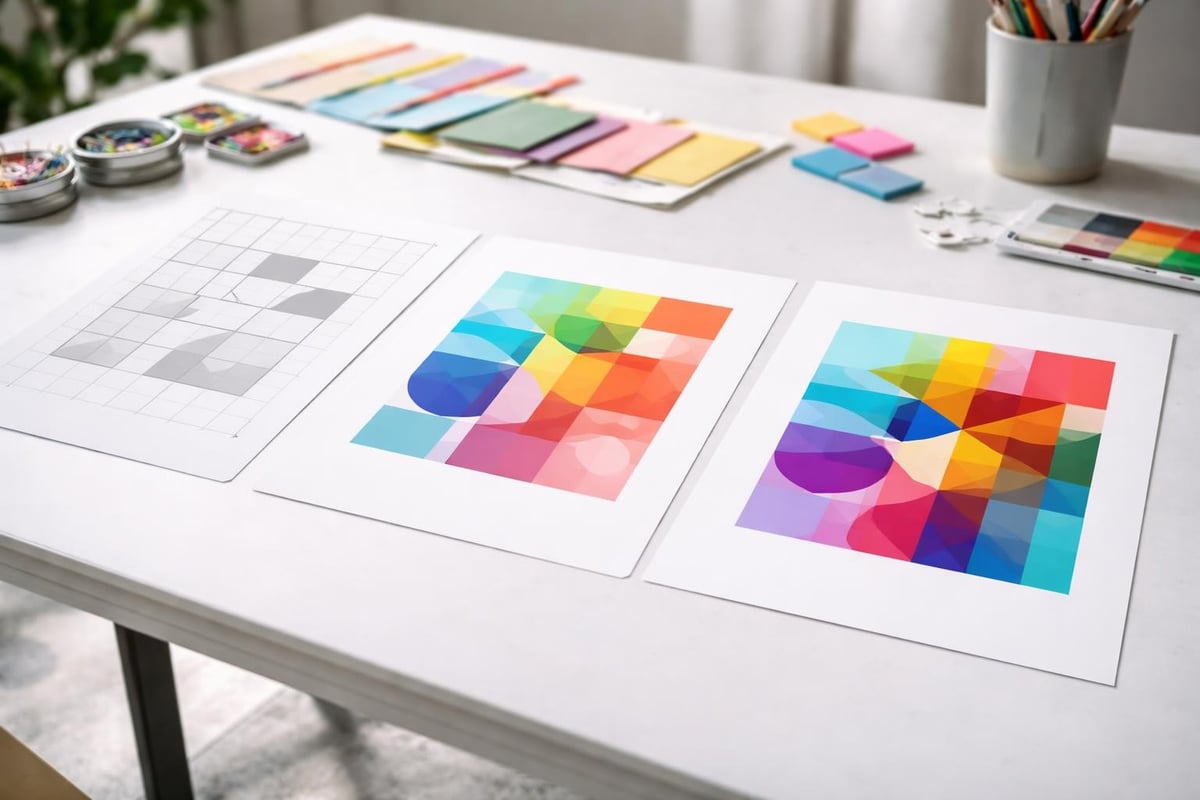
Contemporary chromatic studies often utilize grid frameworks to explore color interactions with precision. Works like the chromatic study series demonstrate how structured compartments can showcase balance and tension through layered geometry, with each section contributing to an overall dialogue of form and hue. These pieces reveal how grid art enables systematic exploration of palette relationships while maintaining visual interest through careful attention to proportion and placement.
Material Considerations and Medium Selection
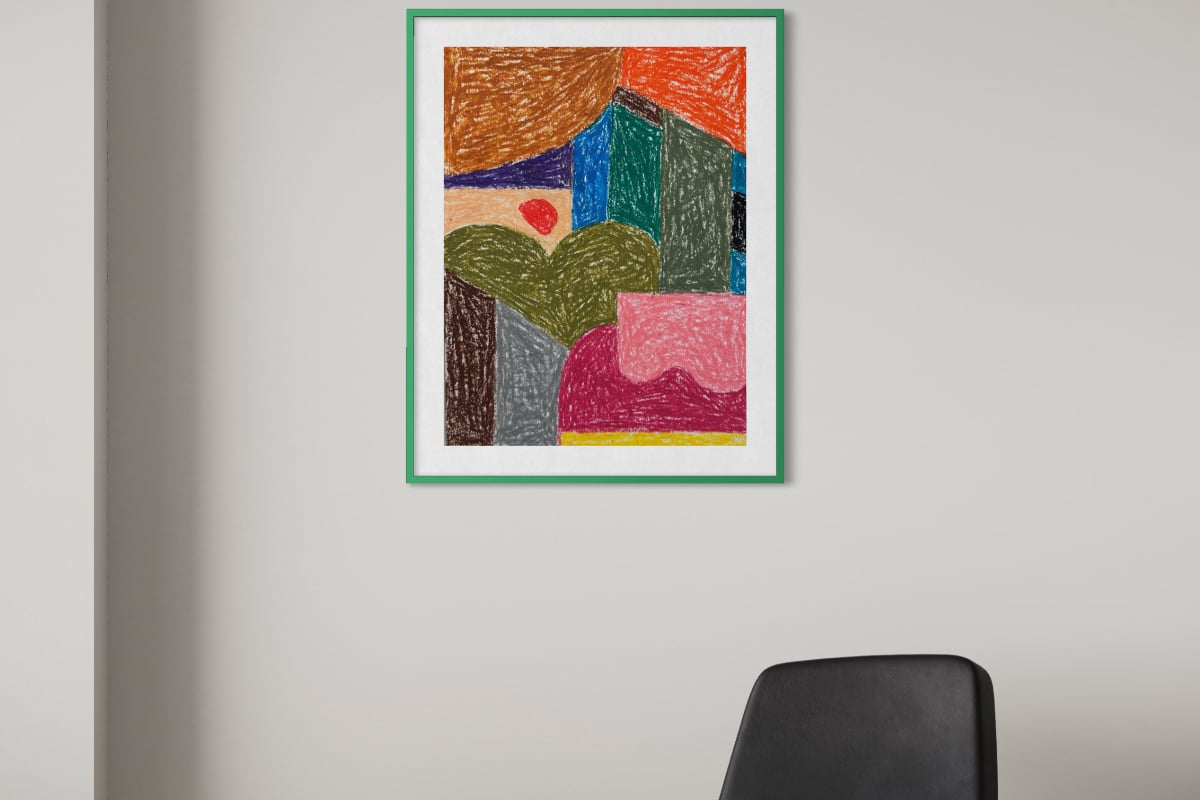
The choice of materials significantly impacts how grid art develops and how viewers perceive the finished work. Traditional media like oil pastel, acrylic, and gouache each respond differently to grid structures, with varying levels of opacity, blending capacity, and surface interaction.
Media Characteristics for Grid Work
| Medium | Advantages | Considerations | Best Applications |
|---|---|---|---|
| Oil Pastel | Rich pigment, blendable | Requires fixative | Chromatic studies, layered work |
| Acrylic | Fast drying, versatile | Can appear flat | Large-scale grids, architectural themes |
| Watercolor | Transparent, luminous | Less control | Subtle gradations, atmospheric effects |
| Digital | Infinite revision | Lacks tactile quality | Precise geometry, collaborative projects |
Artists working across multiple collections often discover that certain grid configurations suit specific media better than others. Experimentation remains essential for developing personal approaches that leverage material strengths while minimizing limitations.
The support surface also influences outcomes. Paper provides portability and accessibility, while canvas offers durability and traditional associations. Archival considerations matter for artists creating works intended for long-term preservation, making material selection a critical decision point.
Color Theory Within Grid Structures
Grid art provides an ideal framework for exploring color relationships systematically. Each compartment functions as a controlled environment where hue, value, and saturation interact with surrounding elements. This organization allows artists to test theories about complementary colors, analogous harmonies, and temperature contrasts with clarity.
Advanced practitioners use grids to develop complex chromatic progressions. A grid might trace gradual shifts from warm to cool temperatures, document tonal variations of a single hue, or juxtapose maximum saturation against neutral tones. These studies inform larger compositional decisions and deepen understanding of how colors influence emotional response.
- Complementary contrasts: Placing opposites in adjacent compartments to maximize vibrancy
- Analogous harmonies: Arranging neighboring hues for subtle, cohesive effects
- Temperature progressions: Transitioning from warm yellows and reds to cool blues and greens
- Value studies: Exploring lightness and darkness within restricted palettes
- Saturation variations: Comparing pure pigments against muted or grayed versions
The educational value of these exercises extends beyond grid art specifically, enhancing overall color literacy that applies to any artistic practice.
Collaborative and Digital Grid Projects
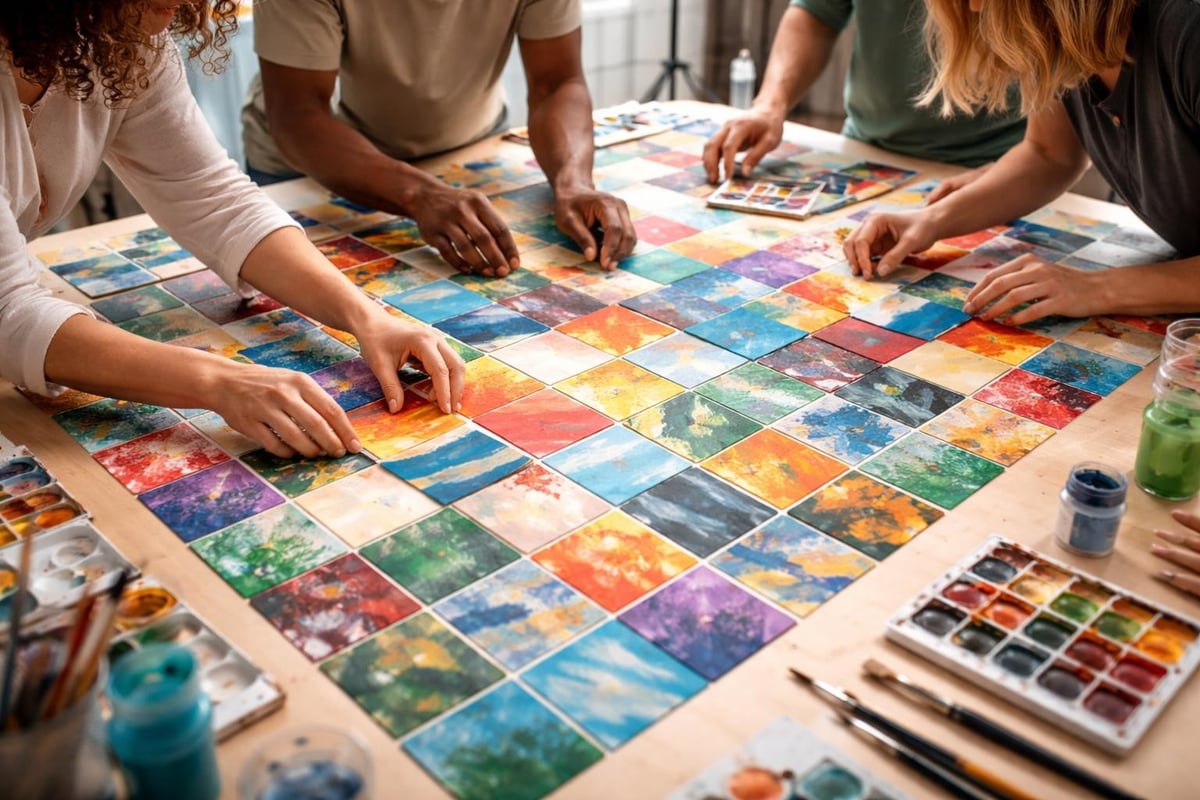
Digital technology has expanded grid art possibilities through collaborative platforms and interactive experiences. Gridcosm represents a pioneering example, functioning as a continuously expanding collaborative project where artists worldwide contribute images to an evolving grid structure. This collective approach transforms the grid from an individual organizational tool into a shared creative space.
The net-art interpretation of Gridcosm demonstrates how grid frameworks facilitate asynchronous collaboration across geographic boundaries. Each contributor works within defined parameters, yet the cumulative effect produces unexpected visual narratives that no single artist could generate alone. This model has influenced subsequent digital art initiatives exploring collective creativity.
Digital Tools and Applications
Contemporary artists working digitally benefit from software specifically designed for grid-based composition. These tools offer:
- Precise measurement: Snap-to-grid functions ensuring mathematical accuracy
- Layer management: Separating grid structure from content for flexible editing
- Color sampling: Testing palette variations quickly across multiple compartments
- Export options: Generating files optimized for various output methods
- Template creation: Saving grid configurations for repeated use
The integration of graphic design grid principles into fine art practice blurs traditional boundaries between disciplines, creating hybrid approaches that leverage both aesthetic and functional considerations.
Educational Applications and Skill Development
Grid art serves powerful educational purposes, building foundational skills that support broader artistic development. Educational resources like Science Delivered's grid art activities demonstrate how structured exercises develop spatial reasoning and mathematical thinking alongside creative expression. These cross-disciplinary benefits make grid-based projects valuable across age groups and skill levels.
Beginning artists often find grids less intimidating than open composition. The structure provides decision-making support, limiting overwhelming choices while encouraging systematic exploration. As confidence builds, artists can gradually reduce grid reliance or incorporate it more subtly into their process.
Intermediate and advanced practitioners use grid art to push technical boundaries and conceptual investigations. The framework supports serial work, where multiple pieces explore variations on themes, and installation projects that require precise spatial relationships among components.
Contemporary Interpretations and Innovations
Current artistic practice demonstrates grid art's continued relevance through fresh interpretations that challenge traditional assumptions. Some creators subvert the grid's organizational purpose, deliberately introducing chaos, organic forms, or irregular elements that create tension against the structured background. Others embrace technological integration, using programmed algorithms to generate grid-based compositions that evolve over time.
Artists exploring chromatic architecture and geometric abstraction often return to grid foundations while pushing them in unexpected directions. These contemporary explorations maintain connections to historical precedents while addressing current aesthetic and conceptual concerns.
The grid's adaptability ensures its ongoing presence in artistic dialogue. Whether serving as primary organizational principle or subtle underlying structure, it continues offering artists a reliable framework for innovation. Works ranging from intimate drawings on paper to monumental installations demonstrate the grid's scalability and versatility across contexts.
Professional Practices and Portfolio Development
For artists building professional practices, grid art offers strategic advantages for portfolio development and market positioning. The structured approach produces cohesive bodies of work that communicate systematic investigation and conceptual rigor. Collectors and galleries often appreciate grid-based series for their visual consistency and intellectual framework.
Documenting grid art processes through photography or video provides compelling content for professional platforms and social media engagement. Showing progression from initial grid layout through completed composition helps audiences understand artistic methodology and decision-making, building deeper connections with the work.
Artists can explore grid work examples from established practitioners to understand how others have developed distinctive approaches within this framework. Studying diverse interpretations reveals possibilities for personal innovation while respecting the grid's essential characteristics.
Marketing Grid-Based Artwork
- Present series as cohesive investigations rather than isolated pieces
- Emphasize systematic exploration and conceptual rigor in descriptions
- Document process through work-in-progress imagery and video
- Connect grid structure to broader themes in artist statements
- Offer varied scales and price points within grid-based collections
These professional considerations help artists translate creative practice into sustainable careers while maintaining artistic integrity.
Grid art continues providing artists with a powerful framework for balancing structure and expression, offering endless possibilities for exploration across media, scales, and conceptual approaches. Whether you're developing foundational skills or pushing experimental boundaries, the grid's organizational clarity supports creative growth and technical mastery. Discover how contemporary artists integrate these principles into original works that celebrate color, form, and geometric precision at Nathalie Chikhi, where collections ranging from chromatic studies to architectural abstractions demonstrate grid art's enduring creative potential.
