

Large murals have emerged as powerful artistic statements that transform ordinary spaces into extraordinary environments. These expansive artworks transcend traditional framing limitations, offering businesses and homeowners the opportunity to make bold visual declarations. Whether adorning corporate lobbies, retail storefronts, or residential interiors, large murals create immersive experiences that command attention and shape the character of entire spaces.
Understanding the Impact of Large Murals in Contemporary Spaces
Large murals function as architectural elements that fundamentally alter how we experience interior and exterior environments. Unlike conventional artwork that occupies designated wall space, these expansive compositions integrate seamlessly with their surroundings, creating cohesive visual narratives.
The scale of large murals allows artists to explore compositional possibilities unavailable in smaller formats. Sweeping gestures, intricate patterns, and chromatic progressions unfold across multiple feet of surface area, engaging viewers through peripheral vision and creating spatial depth. This expansive canvas enables storytelling that unfolds gradually as observers move through space.
Cultural Significance and Historical Context
Throughout history, civilizations have recognized the power of large-scale wall art to communicate values and commemorate events. The Great Wall of Los Angeles stands as a testament to this tradition, depicting California's diverse history across half a mile of concrete. Modern large murals continue this legacy while embracing contemporary aesthetics and technologies.
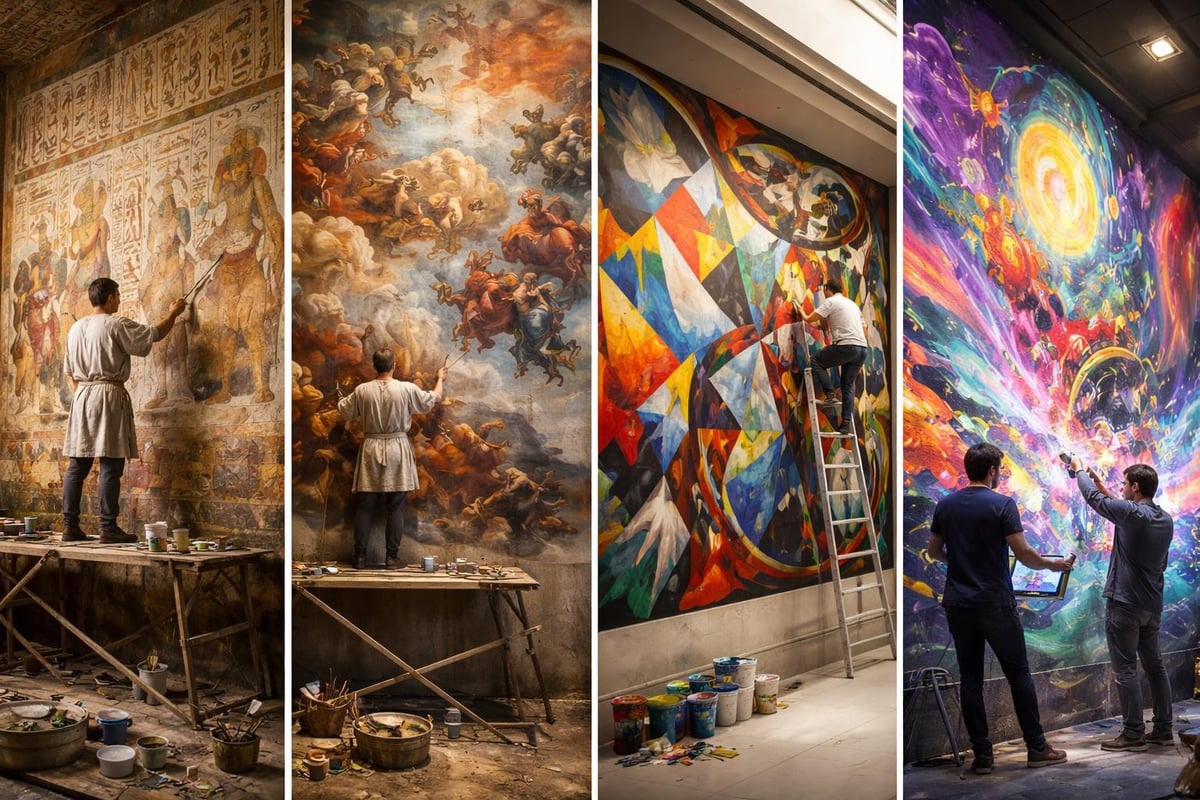
Artists like Aniekan Udofia have demonstrated how large murals activate urban environments, transforming overlooked spaces into cultural landmarks. The monumentality of these works creates focal points that anchor neighborhoods and inspire community pride.
Planning and Designing Large Murals for Maximum Impact
Successful large murals require meticulous planning that addresses both artistic vision and practical constraints. The design process begins with comprehensive site analysis, evaluating architectural features, lighting conditions, and viewer circulation patterns.
Site Assessment and Preparation
Before conceptualizing designs, conduct thorough evaluations of the intended surface:
- Wall condition and material composition (concrete, brick, drywall, exterior siding)
- Structural integrity and load-bearing capacity for heavy materials
- Existing texture and surface preparation requirements
- Environmental factors including moisture, temperature fluctuations, and UV exposure
- Accessibility for installation and future maintenance needs
The physical characteristics of your wall significantly influence material selection and application techniques. Porous surfaces absorb paint differently than sealed walls, requiring adjusted formulations and primers.
Conceptual Development and Visual Hierarchy
Designing large murals demands careful attention to visual hierarchy and compositional balance. Elements that appear cohesive in small-scale sketches may overwhelm when scaled to architectural dimensions.
| Design Consideration | Small-Scale Impact | Large-Scale Impact |
|---|---|---|
| Color intensity | Vibrant, focused | Can overwhelm; requires tonal variation |
| Line weight | Delicate details visible | Must increase for visibility from distance |
| Compositional density | Full coverage works well | Negative space becomes crucial |
| Viewing distance | Arm's length to few feet | Multiple feet to across rooms |
Understanding how viewers interact with large murals informs design decisions. Consider sightlines from various positions-some observers see the entire composition from distance, while others experience fragments up close.
Material Selection and Technical Considerations
The longevity and visual quality of large murals depend heavily on material choices appropriate to installation environments and artistic goals.
Paint Systems and Application Methods
Professional mural artists evaluate multiple paint systems based on project requirements:
- Acrylic emulsions offer excellent adhesion, UV resistance, and color stability for both interior and exterior applications
- Oil-based systems provide luminous depth and extended working time but require proper ventilation and longer curing periods
- Specialty coatings including automotive enamels deliver exceptional durability for high-traffic areas
- Digital printing on vinyl or canvas enables photographic precision and rapid installation
- Mixed media approaches combine traditional painting with applied elements for dimensional interest
Environmental considerations shape material selection. Exterior large murals face weathering, requiring formulations resistant to fading, moisture penetration, and temperature extremes. Interior installations prioritize low-VOC options that maintain air quality.
Scaling Techniques and Transfer Methods
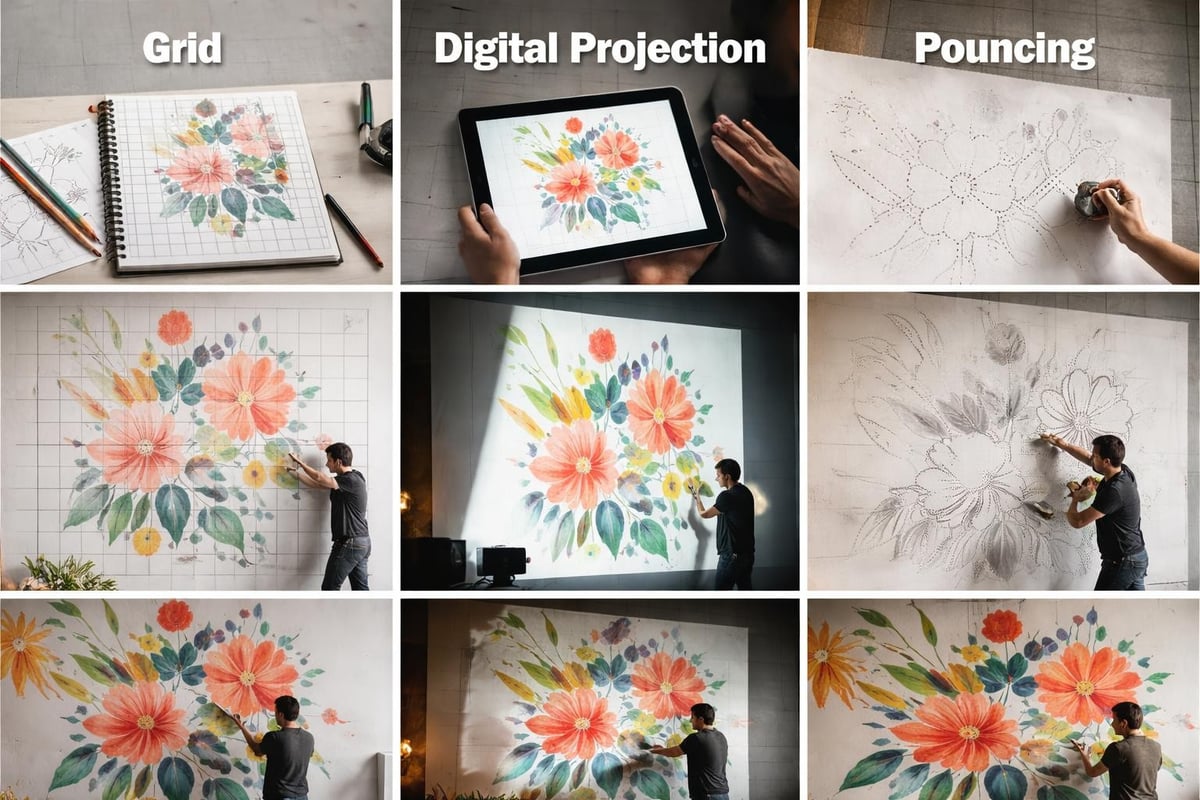
Translating designs to large murals challenges even experienced artists. Several proven techniques facilitate accurate scaling:
- Grid method dividing both sketch and wall into proportional squares
- Projection using digital projectors to cast reference images
- Pouncing transferring perforated patterns with chalk dust
- Freehand techniques relying on trained observation and proportion assessment
- Digital fabrication producing full-scale vinyl applications from computer files
Each method offers distinct advantages. Projection provides precision but requires darkness and electrical access. Grid systems work anywhere but demand patience and mathematical accuracy.
Color Theory and Visual Psychology in Large Murals
Color relationships amplify dramatically when expanded across architectural surfaces. Large murals create immersive chromatic environments that influence mood, perception, and spatial experience.
Chromatic Progression and Spatial Dynamics
Strategic color deployment manipulates perceived dimensions. Warm hues advance visually, making surfaces appear closer, while cool tones recede, expanding apparent space. Understanding color psychology in geometric design enables designers to craft environments that support functional goals.
Large murals in hospitality settings often incorporate energizing palettes-vibrant yellows, oranges, and reds-that stimulate social interaction. Healthcare environments benefit from calming blues and greens that reduce anxiety. Corporate spaces increasingly embrace bold chromatic statements that reinforce brand identity while energizing employees.
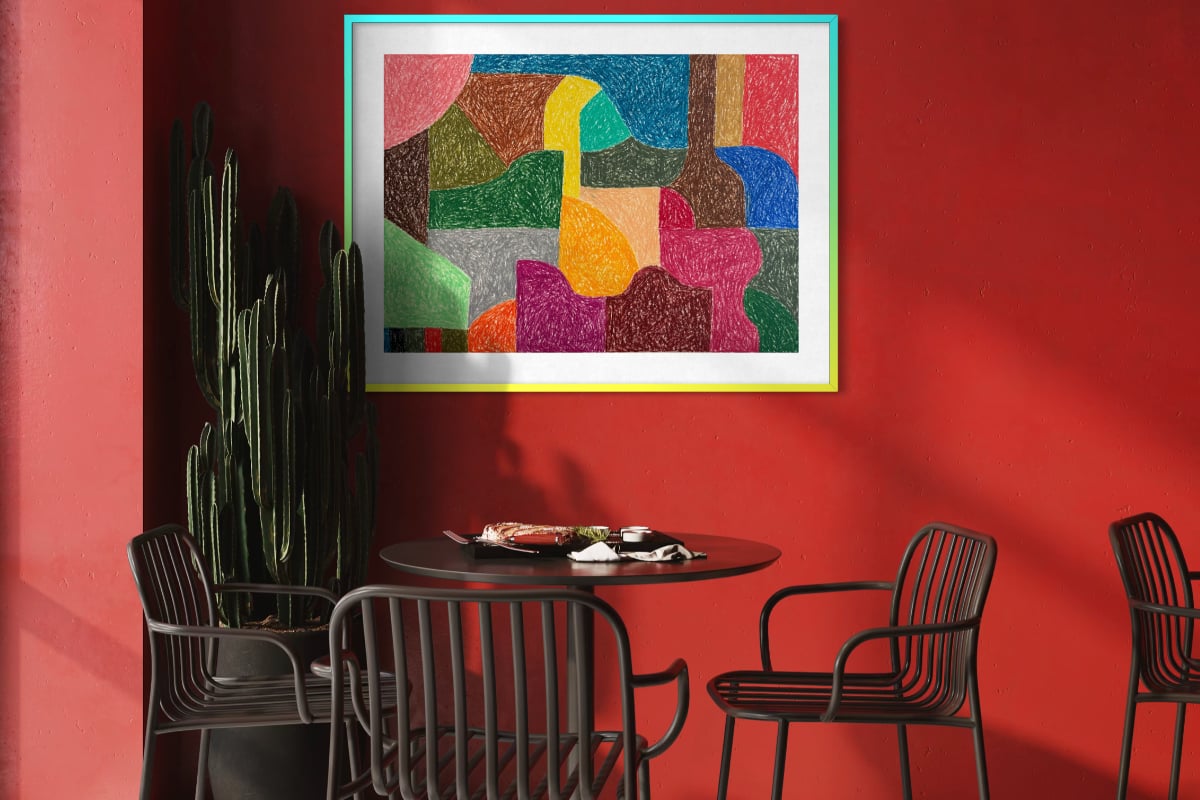
Contemporary artists explore chromatic architecture through layered geometry that creates visual depth. Works featuring complex color interactions demonstrate how hue, saturation, and value progressions guide viewer attention across expansive compositions. The Monumental Poster Edition (30x22) showcases this approach through carefully balanced geometric forms that explore tension between warm and cool zones, offering collectors accessible entry into chromatic exploration at impressive scale.
Tonal Modulation and Atmospheric Perspective
Large murals spanning significant wall area benefit from tonal variation that prevents visual monotony. Atmospheric perspective techniques-gradually reducing contrast and intensity with implied distance-create illusionistic depth even on flat surfaces.
Artists working with abstract compositions employ subtle gradations that guide movement across the visual field. These transitions maintain engagement as observers scan the artwork, discovering new relationships between elements.
Installation Methods and Professional Execution
Translating designs into finished large murals requires technical expertise, appropriate equipment, and systematic execution. Professional installation ensures both aesthetic quality and structural longevity.
Scaffolding and Safety Protocols
Accessing large wall surfaces safely demands proper equipment and procedures:
- Assess ceiling height and wall accessibility to determine scaffolding requirements
- Secure professional-grade scaffolding with adequate platform width for materials and movement
- Implement fall protection including harnesses for elevated work
- Establish ventilation particularly when using solvent-based materials
- Maintain clean work zones protecting floors and furnishings from overspray
Many professional muralists carry general liability insurance covering installation activities. Verify coverage before beginning work, particularly in commercial environments.
Surface Preparation and Priming
Proper preparation determines adhesion and finish quality:
- Clean surfaces thoroughly, removing dust, oils, and loose material
- Repair cracks, holes, and imperfections with appropriate fillers
- Sand rough areas to create uniform texture
- Apply primer formulated for both substrate and topcoat system
- Allow complete curing before beginning artwork application
Rushing preparation compromises long-term durability. Proper surface treatment prevents peeling, cracking, and premature deterioration.
Large Murals in Commercial Applications
Businesses increasingly recognize large murals as strategic investments that differentiate brands, enhance customer experience, and create social media appeal. These installations function simultaneously as art, marketing, and environmental design.
Retail and Hospitality Environments
Retail spaces deploy large murals to establish distinctive atmospheres that encourage extended visits and purchases. Why murals are the future of retail spaces explores how these installations influence consumer behavior and brand perception.
Restaurants and hotels commission large murals that become destination features, attracting visitors who photograph and share installations on social platforms. This organic promotion amplifies marketing reach while creating memorable experiences that encourage return visits.
Corporate Identity and Brand Expression
Forward-thinking companies transform lobbies, conference rooms, and collaborative spaces with large murals that embody organizational values. These installations communicate culture to employees, clients, and visitors more powerfully than mission statements.
Tech companies favor dynamic abstract compositions suggesting innovation and forward movement. Creative agencies embrace bold color and experimental forms. Professional services firms select sophisticated geometric abstractions that convey precision and expertise.
Commissioning Custom Large Murals
Custom commissions enable perfect alignment between artistic vision and spatial requirements. Working with professional artists ensures technically sound execution while supporting creative livelihoods.
Selecting the Right Artist
Identifying artists whose aesthetic resonates with your vision requires research and consideration:
| Evaluation Factor | Questions to Consider |
|---|---|
| Portfolio alignment | Does their existing work reflect desired style and complexity? |
| Scale experience | Have they successfully completed large murals? |
| Technical proficiency | Do they demonstrate mastery of chosen medium? |
| Communication skills | Can they articulate concepts and collaborate effectively? |
| Project management | Do they meet deadlines and manage logistics professionally? |
Review previous installations in person when possible. Photographs cannot fully convey surface quality, color accuracy, or spatial impact.
Collaboration and Creative Process
Successful commissions balance artistic freedom with client objectives. Establish clear parameters regarding:
- Budget including materials, installation, and artist fees
- Timeline from concept approval through installation completion
- Design approval stages and revision allowances
- Site access and working hour constraints
- Ownership and reproduction rights
Artists often develop multiple concept options for client selection, then refine chosen directions through successive iterations. This process ensures alignment while allowing creative exploration.
When considering how to choose abstract art for your space, remember that large murals become defining environmental features. Select artists whose work you genuinely appreciate rather than following transient trends.
Maintenance and Long-Term Preservation
Large murals represent significant artistic and financial investments deserving proper care. Proactive maintenance extends lifespan and preserves visual impact.
Cleaning and Touch-Up Protocols
Develop maintenance schedules appropriate to installation environments:
- Low-traffic interior locations: Annual gentle cleaning with microfiber cloths
- High-traffic commercial spaces: Quarterly cleaning plus semi-annual inspection
- Exterior murals: Bi-annual professional assessment and cleaning
- Touch-up as needed: Address damage promptly to prevent expansion
Use only cleaning solutions compatible with paint systems. Test products in inconspicuous areas before applying to visible surfaces. Harsh chemicals or abrasive methods damage finishes and compromise longevity.
Environmental Protection Strategies
Preventive measures minimize deterioration:
- UV-protective coatings for installations receiving direct sunlight
- Climate control maintaining stable temperature and humidity
- Lighting systems using LED fixtures that minimize heat and UV output
- Barrier installation in high-contact areas preventing physical damage
- Documentation photographing installations upon completion for restoration reference
Artists often provide care instructions specific to materials and techniques employed. Follow these recommendations to maintain warranty coverage and preserve investment value.
Emerging Trends and Future Directions
The large murals field continues evolving through technological innovation, environmental consciousness, and expanded accessibility.
Digital Integration and Augmented Reality
Artists increasingly combine traditional mural techniques with digital elements. Augmented reality applications overlay animated content onto physical installations, creating multi-layered experiences viewable through smartphones. QR codes embedded in compositions link to artist statements, creation documentation, or interactive features.
Projects like Guido van Helten's grain elevator murals demonstrate how contemporary artists transform industrial structures into cultural landmarks, recontextualizing architecture through artistic intervention.
Sustainable Materials and Eco-Conscious Practices
Environmental awareness drives material innovation. Manufacturers develop plant-based paints, recycled substrates, and low-impact application methods. Artists embrace sustainable practices including:
- Water-based paint systems eliminating toxic solvents
- Reclaimed surfaces and architectural salvage as canvases
- Local sourcing reducing transportation emissions
- Biodegradable installation materials
- Long-lasting formulations minimizing replacement frequency
These approaches align artistic practice with environmental responsibility while delivering exceptional aesthetic results.
Democratization and Accessibility
Technology lowers barriers to large mural creation. Digital printing enables artists without traditional mural training to produce architectural-scale work. Removable wallcoverings allow renters to install temporary large murals without permanent modification.
This democratization expands who creates and commissions large murals while raising questions about craft, authenticity, and artistic value. The distinction between prints and original artwork becomes increasingly nuanced as production methods diversify.
Inspirational Examples and Case Studies
Examining notable large murals illuminates possibilities and approaches:
Mark Rothko's Seagram Murals explored contemplative abstraction at architectural scale, demonstrating how large format intensifies emotional resonance. Though never installed as intended, these works influenced generations of artists pursuing transcendent experience through color and proportion.
Josef Albers' Manhattan mural showcased how geometric systems adapt to expansive formats. The systematic color relationships characteristic of Albers' smaller studies achieved monumental presence when enlarged, proving that rigorous formal investigation scales successfully.
Keith Haring's Construction Fence installation exemplified how large murals activate non-traditional surfaces. By transforming temporary barriers into vibrant compositions, Haring demonstrated that compelling artwork enhances any environment regardless of conventional artistic suitability.
Candido Portinari's War and Peace murals at the United Nations illustrate how large murals communicate complex narratives. These monumental works engage universal themes through imagery comprehensible across cultural boundaries, fulfilling large murals' potential as vehicles for shared meaning.
Integration with Interior Design Strategies
Designers increasingly specify large murals as foundational elements rather than decorative additions. This shift recognizes how these installations fundamentally shape spatial character and occupant experience.
Residential Applications
Homeowners commission large murals for living spaces, bedrooms, and even kitchens, creating personalized environments reflecting individual taste. These installations offer several advantages over traditional art display:
- Unified visual impact without gallery-wall complexity
- Custom sizing perfectly fitted to architectural dimensions
- Immersive experience engaging entire rooms
- Conversation-worthy features distinguishing homes from generic interiors
- Flexible interpretation supporting evolving furnishing schemes
Designers working with avant-garde abstract art for interior designers recognize how large murals anchor luxury environments while providing visual excitement that elevates entire projects.
Commercial and Institutional Settings
Healthcare facilities deploy large murals in waiting areas and patient rooms, reducing stress through engaging visual environments. Educational institutions commission installations celebrating learning, diversity, and institutional values. These applications demonstrate how large murals serve functional purposes beyond aesthetic enhancement.
Large murals represent one of art's most impactful forms, transforming spaces while providing artists opportunities for ambitious creative expression. Whether pursuing contemporary abstraction, figurative narrative, or geometric exploration, these expansive works demonstrate art's power to shape how we experience built environments. Nathalie Chikhi creates original artworks exploring chromatic architecture and geometric form, offering collectors distinctive pieces that bring bold artistic vision into residential and commercial spaces through paintings, prints, and commissioned works.
